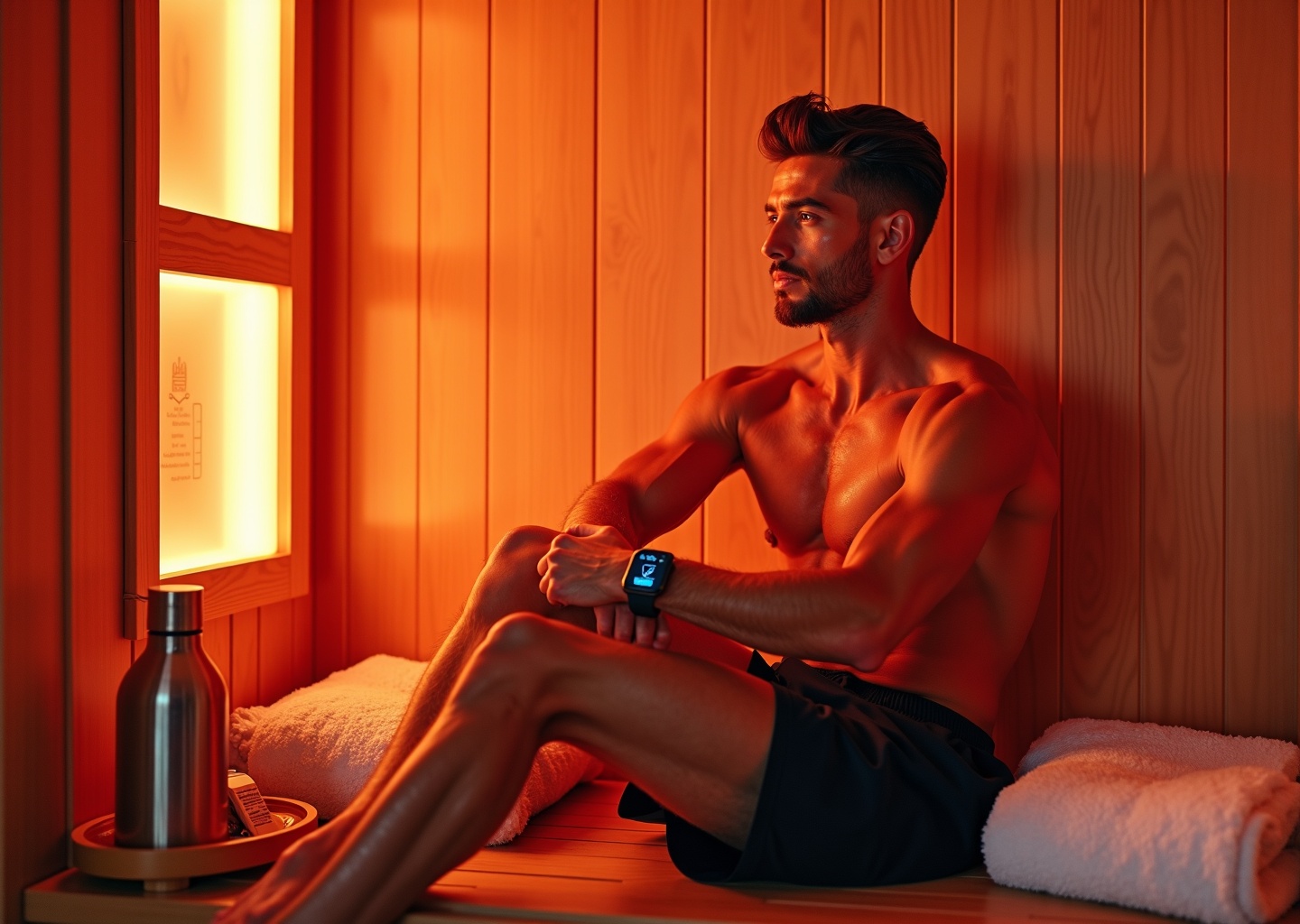
This article translates the neuroscience-focused approach to sauna use, popularized by researchers like Andrew Huberman, into actionable infrared protocols for recovery, detoxification, and longevity. You’ll learn how heat drives cellular hormesis, practical session plans for athletes and biohackers, safety guidelines, and what biomarkers and routines to track to maximize performance and long-term health.
Why Neuroscience and Heat Matter for Performance and Longevity
Deliberate heat exposure is far more than a method for relaxation; it’s a powerful biological trigger that leverages the body’s innate stress-response systems for profound benefits. Viewing sauna use through a neuroscience lens, as popularized by Stanford neuroscientist Andrew Huberman, reframes it as a form of hormesis. This is the principle where a mild, controlled stressor prompts adaptations that make the body stronger and more resilient. Instead of simply feeling good, you are actively training your cellular machinery for better performance and a longer, healthier life. The benefits aren’t magic; they are the direct result of specific physiological and neurological mechanisms being switched on by the heat.
At the heart of the sauna neuroscience conversation are heat shock proteins (HSPs). These are specialized molecules that act as intracellular “chaperones.” Their primary job is to find damaged or misfolded proteins, refold them into their correct functional shape, and prevent them from clumping together. This is critically important for brain health, as protein aggregation is a hallmark of neurodegenerative diseases like Alzheimer’s and Parkinson’s. The evidence for heat’s effect on HSPs is strong. Human studies, including those discussed on the Huberman Lab platform, show that a single sauna session can significantly increase HSP levels. This cellular cleanup crew enhances resilience against future stressors, from intense exercise to environmental toxins, effectively fortifying your cells from the inside out.
Heat exposure also serves as a potent workout for your autonomic nervous system (ANS). During a sauna session, your body enters a state of sympathetic activation, similar to moderate cardiovascular exercise. Your heart rate increases, blood vessels dilate, and blood flow is shunted to the skin to dissipate heat. Following the session, a powerful parasympathetic rebound occurs. This “rest and digest” response calms the body, lowers cortisol, and can significantly improve sleep quality when timed correctly. This autonomic “switching” trains your nervous system to better handle stress and recover more efficiently, a key component of the Huberman Protocol for building resilience.
The most robust evidence for sauna’s longevity benefits comes from large-scale observational studies, particularly the Finnish Kuopio Ischemic Heart Disease Risk Factor (KIHD) Study. This long-term research, published in journals like JAMA Internal Medicine, has followed thousands of men for decades. The findings are striking. Men who used a sauna 4 to 7 times per week had a dramatically lower risk of sudden cardiac death, fatal coronary heart disease, and all-cause mortality compared to those using it once a week. While this data shows a strong association rather than direct causation, the dose-dependent relationship provides compelling support for making sauna use a regular habit.
Beyond these well-established effects, emerging research points to other powerful mechanisms. Heat stress has been shown in animal models to promote mitochondrial biogenesis, the creation of new mitochondria, through pathways involving PGC-1α. More mitochondria mean more cellular energy, which translates to better endurance and metabolic health. There is also evidence that regular sauna use can modulate inflammation, with studies showing reductions in C-reactive protein (CRP), a key inflammatory marker. Furthermore, while direct human evidence from sauna use is still developing, the rise in core body temperature is known to be a stimulus for releasing neurotrophic factors like Brain-Derived Neurotrophic Factor (BDNF). BDNF is like fertilizer for your brain, supporting the survival of existing neurons and encouraging the growth of new ones. These mechanisms, taken together, illustrate how controlled heat exposure is a multifaceted tool for optimizing health, directly impacting everything from cellular repair and energy production to nervous system regulation and brain function.
Infrared Versus Traditional Sauna What the Science and Practical Differences Are
The fundamental difference in the infrared sauna vs traditional sauna debate comes down to how they deliver heat. A traditional Finnish sauna, whether powered by wood, steam, or an electric heater, works by heating the air around you to very high temperatures. This is called convective heating. An infrared sauna, on the other hand, uses infrared light emitters to warm your body directly with radiant heat, without dramatically heating the air. This core difference in mechanism dictates everything from the temperature and session length to the specific physiological responses and which type might be better for your goals.
Let’s talk numbers. The landmark Finnish studies that linked frequent sauna use to remarkable longevity and cardiovascular benefits used traditional saunas cranked to 176–212°F (80–100°C). Sessions in this intense heat are typically shorter, often lasting 5 to 20 minutes before a cooling break. In contrast, infrared saunas operate at a much more moderate ambient temperature, usually between 110–150°F (43–66°C). This lower temperature allows for longer, more tolerable sessions, often ranging from 20 to 45 minutes. While the air temperature is lower, the radiant heat warms your tissues directly, producing a deep and profuse sweat.
This brings us to cardiovascular strain and physiological response. Both types of saunas will increase your core body temperature and heart rate, mimicking the effects of moderate-intensity exercise. A traditional sauna places a significant and immediate load on the cardiovascular system due to the extreme ambient heat. An infrared sauna achieves a similar core temperature increase more gradually and with less intense air temperature, which some people find more comfortable. The ultimate goal for triggering many of the benefits discussed in the previous chapter, like activating heat shock proteins, is raising your core body temperature. Both tools can get you there, but they take different routes.
One of the most debated topics is detoxification. Marketing for infrared saunas often emphasizes their ability to “detoxify” the body by pulling heavy metals and other toxins out through sweat. Here, we need to look at the sauna detox evidence carefully. It is true that sweat contains trace amounts of substances like BPA, phthalates, and heavy metals. However, studies measuring blood, urine, and biopsy samples confirm that the liver and kidneys are the body’s primary and most efficient detoxification organs. The amount of toxins excreted through sweat is minimal compared to what these organs process daily. The idea that you can meaningfully detoxify your body through sweating alone, whether in an infrared or traditional sauna, is not strongly supported by rigorous scientific data.
So, how do you choose? It depends entirely on your primary goal.
- For Heat Acclimation and Longevity: The traditional sauna is the clear winner. The high-heat environment is precisely what was studied in the Finnish cohorts and is unmatched for preparing the body for endurance performance in hot weather. If you’re chasing the specific longevity benefits seen in that research, mimicking the original conditions makes the most sense. Andrew Huberman often points to the robust data behind traditional saunas for these endpoints.
- For Post-Workout Recovery and Pain Relief: Here, infrared sauna benefits may shine. The radiant heat is claimed to penetrate deeper into muscle and joint tissue, potentially increasing circulation and easing soreness more directly. Athletes often report feeling less stiff after an infrared session, making it a popular choice for recovery days or after intense training.
- For Relaxation and Sleep: This is a matter of personal preference. The gentle, sustained warmth of an infrared sauna can be deeply calming and meditative, making it a great tool to wind down before bed. Conversely, the intense heat of a traditional sauna followed by a cold plunge creates a powerful parasympathetic nervous system rebound, which can also dramatically improve sleep quality. Experimentation is key to see which method your nervous system responds to best.
Ultimately, both infrared and traditional saunas are powerful tools for leveraging deliberate heat exposure. The best choice depends on your specific goals, your tolerance for heat, and what you can access consistently. The key is not the type of sauna itself, but the physiological state it helps you achieve.
Huberman Style Protocols and Practical Session Templates for Athletes and Biohackers
Andrew Huberman’s approach to deliberate heat exposure is not about simply enduring heat; it’s about using specific protocols to trigger desired physiological adaptations. The goal is to apply a precise dose of heat stress to elicit a hormetic response, strengthening the body’s systems over time. The key is understanding that different goals, from athletic performance to longevity, require different applications of frequency, duration, and temperature. The underlying mechanism for many benefits is achieving a core body temperature elevation of approximately 1 to 1.5 degrees Celsius, which activates pathways like heat shock protein (HSP) production and cardiovascular conditioning. This section provides practical, Huberman-aligned templates for three distinct user profiles, forming a solid foundation for a personal infrared sauna routine.
Protocols Tailored by Goal
For the Endurance Athlete (Heat Acclimation & Recovery)
The primary goals are improving thermoregulation, expanding plasma volume for better cardiovascular efficiency, and accelerating recovery.
- Weekly Frequency: 3 to 5 sessions per week. Consistency is key for heat acclimation.
- Duration & Temperature: 25–40 minutes at 130–160°F (54–71°C). The aim is sustained, deep sweating and an elevated heart rate.
- Progressive Acclimation: Start with 3 sessions of 15 minutes in the first week. Add 5 minutes to each session weekly until you reach your target duration.
- Timing: Ideally, 3–6 hours post-training on workout days or on recovery days. This timing supports adaptation without adding excessive stress immediately after a hard session.
- Hydration Strategy: Weigh yourself before and after each session. For every pound (or ~0.5 kg) of weight lost, consume 16–24 ounces (~500–700 ml) of water with an electrolyte mix containing sodium and potassium within two hours.
- Cold Exposure Pairing: For enhanced recovery, a 1–3 minute cold plunge or shower can follow the sauna session after a brief cool-down period. This drives blood from the periphery back to the core.
For the Strength Athlete (Recovery & Growth Hormone)
The focus is on muscle recovery, reducing inflammation, and leveraging heat for potential endocrine benefits like growth hormone (GH) release.
- Weekly Frequency: 2 to 3 recovery sessions per week, plus one optional GH-focused session.
- Duration & Temperature: For recovery, 20–30 minutes at 140–170°F (60–77°C). For the GH protocol, follow the specific split-session template: 30 minutes in the sauna, a 5-minute cool-down period outside, followed by another 30 minutes in the sauna. This GH session should be done only once per week to maintain its potent effect.
- Progressive Acclimation: Begin with two 20-minute sessions per week. After two weeks, introduce the GH protocol, perhaps starting with a 20-5-20 minute split and building up to the full duration.
- Timing: Crucially, wait at least 3–6 hours after resistance training. Some evidence suggests immediate post-workout heat may interfere with hypertrophic signaling. The GH protocol is best performed in a semi-fasted state (2–3 hours after a meal).
- Hydration Strategy: Follow the same weigh-in/weigh-out protocol as endurance athletes, ensuring robust electrolyte replacement, especially after the longer GH session.
- Cold Exposure Pairing: Use cold exposure on separate days or long before a lifting session to avoid any potential blunting of the inflammatory response needed for muscle growth.
For the Longevity Biohacker (Cardiovascular & Neuroprotection)
This protocol mirrors the habits of populations in Finnish studies linked to reduced all-cause mortality, focusing on frequent exposure to activate HSPs and improve cardiovascular function.
- Weekly Frequency: 4 to 7 sessions per week. The benefits observed in cohort studies are strongly correlated with frequency.
- Duration & Temperature: 20–30 minutes at 150–175°F (65–80°C). The goal is to consistently stress the cardiovascular system in a manner similar to moderate exercise.
- Progressive Acclimation: Start with 4 sessions of 15 minutes in week one. Gradually increase duration to 20-25 minutes over the next month, then increase frequency to 5-7 times per week as tolerated.
- Timing: Can be done any time of day, but many find an evening session promotes relaxation and improves sleep quality due to the post-sauna parasympathetic rebound. Avoid doing it too close to bedtime if you find it energizing.
- Hydration Strategy: Daily hydration is critical. Maintain the weigh-in/weigh-out practice and ensure consistent electrolyte intake, as frequent sweating can deplete minerals over time.
- Cold Exposure Pairing: A popular combination is sauna followed by a cold plunge. This contrast therapy enhances autonomic nervous system resilience. Dr. Susanna Søberg’s work suggests a total of 11 minutes of cold and 57 minutes of heat per week, spread out, is an effective target.
Sample Weekly Routines
Recovery-First Schedule
Designed for an athlete in a heavy training block who needs to prioritize recovery.
- Monday: Rest day. 30-minute sauna session in the evening.
- Wednesday: Post-training (evening). 25-minute sauna session, 4+ hours after workout.
- Friday: Rest day. 35-minute sauna session followed by a 2-minute cold shower.
- Rationale: Sessions are spaced out and timed on rest days or long after training to maximize the parasympathetic rebound effect, reduce inflammation, and promote sleep without interfering with training adaptations.
Performance-Peak Schedule (Endurance Focus)
Built for an athlete preparing for a competition in a warm climate.
- Monday: Post-training. 30-minute sauna.
- Tuesday: Post-training. 30-minute sauna.
- Thursday: Post-training. 30-minute sauna.
- Friday: Post-training. 30-minute sauna.
- Saturday: Rest day. 40-minute sauna.
- Rationale: This high-frequency sauna protocol for athletes is designed to drive heat acclimation, increasing plasma volume and sweat efficiency to boost performance in the heat.
Longevity & Habituation Schedule
For the individual focused on long-term health benefits and building a consistent habit.
- Monday-Friday: 20-minute sauna session, either in the morning to start the day or evening to wind down.
- Sunday: One longer, 30-minute session.
- Rationale: This routine mimics the frequent use seen in Finnish cohort studies, aiming for cumulative cardiovascular and neuroprotective benefits over time. Its consistency makes it a sustainable, lifelong habit.
Adapting for a Busy Life
For busy schedules, prioritize intensity over duration. A shorter, 15-minute session at a slightly higher temperature can still elicit a strong physiological response. When traveling, use hotel or gym saunas, but start with shorter durations, as you may not be able to control the temperature precisely. The key is consistency; even a few short sessions per week are more effective than one long, infrequent session for most goals outside of the specific GH protocol.
Monitoring Safety Contraindications and Practical Risk Management
While the protocols we’ve discussed can unlock powerful adaptations, they must be built on a foundation of safety. Deliberate heat exposure is a potent stressor, and respecting its power is non-negotiable. This isn’t about fear; it’s about intelligent application. Understanding the landscape of sauna safety ensures that your practice remains a tool for health, not a source of risk. Before you even turn the sauna on, a personal safety check is the most critical part of any session. This means knowing when to proceed with caution and, just as importantly, when to abstain entirely.
Certain medical conditions are considered absolute or relative contraindications to sauna use. If you have any of the following, medical clearance from your physician is not just recommended, it’s essential. Absolute contraindications, where sauna use is generally advised against, include unstable cardiovascular diseases like recent myocardial infarction, severe aortic stenosis, and unstable angina. Relative contraindications require a careful conversation with your doctor. These include stable cardiovascular disease, controlled hypertension, and pregnancy. Certain medications also place you in a higher-risk category. Diuretics, beta-blockers, vasodilators, and some antidepressants can impair your body’s ability to regulate temperature and blood pressure, increasing the potential for infrared sauna risks. Anyone with an implanted medical device, such as a pacemaker or defibrillator, must also get clearance from their cardiologist.
Before beginning a routine, ask yourself these pre-screening questions:
- Do I have a diagnosed heart or blood pressure condition?
- Am I pregnant or could I be pregnant?
- Do I have a history of fainting or dizziness (orthostatic intolerance)?
- Am I taking any medications that affect hydration, blood pressure, or thermoregulation?
- Am I feeling unwell or do I have a fever?
If you answer “yes” to any of these, consulting your doctor is the correct next step. This conversation allows you to approach sauna use with a plan tailored to your specific physiology, ensuring you manage the hormetic stress appropriately.
Your body provides real-time feedback during a session. Learning to listen to it is a crucial skill. The most common issues are related to heat illness and dehydration. Early signs include dizziness, nausea, headache, or unusual fatigue. A more specific risk is orthostatic intolerance, the lightheadedness you might feel upon standing up. This happens because heat causes blood vessels to dilate, and when you stand, gravity can cause a temporary drop in blood pressure to your brain. If you feel any of these symptoms, your session is over. Don’t try to push through it. The goal is adaptation, not exhaustion.
If you feel faint, dizzy, or nauseous, your immediate response should be to exit the sauna calmly. Sit or lie down in a cool area, preferably with your feet elevated slightly above your heart. Begin sipping cool water or an electrolyte drink. Do not stand up quickly. In the rare event of more severe symptoms like chest pain, palpitations, sudden severe headache, or confusion, treat it as a medical emergency. Have someone call for medical assistance immediately. These are not typical responses to heat stress and require urgent evaluation. Proper preparation and listening to your body’s early warning signs make these events highly unlikely.
Effective hydration is the cornerstone of sauna safety. The rule is simple: always start your session well-hydrated. A practical way to monitor fluid loss is to weigh yourself immediately before and after your session. For every pound (~0.5 kg) of weight lost, aim to replace it with 16–24 ounces (~500–700 ml) of fluid containing electrolytes over the next few hours. Relying on thirst alone is often not enough. Urine color is another simple gauge; aim for a pale yellow throughout the day. For those using the sauna multiple times a week, especially athletes, replacing electrolytes like sodium and potassium is critical for maintaining performance and preventing cramping.
For newcomers and older adults, a conservative approach is best. Begin with shorter sessions of 5 to 15 minutes at a lower temperature, perhaps around 130-150°F (54-65°C) in an infrared sauna. Focus on how you feel rather than hitting a specific number. Over several weeks, you can gradually increase the duration by a few minutes per session or slightly raise the temperature as you feel comfortable. This slow acclimation allows your cardiovascular and thermoregulatory systems to adapt safely, minimizing risks while still allowing you to access the benefits of deliberate heat exposure.
Optimizing for Performance Recovery and Longevity Tracking Metrics and Modifying Protocols
Transitioning from understanding sauna safety to mastering its application requires a shift in mindset. Instead of just following a generic protocol, the goal is to create a personalized, adaptive routine. This is where tracking becomes essential. By measuring key biological and physiological markers, you can move from guessing to knowing, turning each sauna session into a precise tool for enhancing performance, recovery, and long-term health. The principle is simple; what gets measured gets managed.
The Measurement Toolkit: What to Track
To truly optimize your sauna protocol, you need a multi-layered approach to data collection, combining lab tests, physiological metrics from wearables, and simple home-based observations.
- Lab Biomarkers (The Deep Dive)
These provide a snapshot of your internal biochemistry and are best measured before starting a protocol and after a consistent period, like 12 weeks.- Inflammation Markers: High-sensitivity C-reactive protein (hsCRP) is a key indicator of systemic inflammation. Multiple large-scale observational studies, particularly the Finnish cohorts frequently referenced in longevity research, have linked regular sauna use with lower hsCRP levels. A 2023 review in Mayo Clinic Proceedings reaffirmed these findings, suggesting a dose-dependent relationship.
- Metabolic Health: Fasting insulin and HbA1c are crucial for assessing your metabolic function. Research continues to explore how deliberate heat exposure can improve insulin sensitivity, potentially by mechanisms similar to exercise. Tracking these helps quantify the metabolic benefits.
- Heat Shock Proteins (HSPs): While direct serum assays for proteins like HSP70 are not yet standard clinical practice, they are the direct mechanism of action for many of sauna’s benefits. Understanding that your protocol is designed to stimulate these cellular repair agents is key. As discussed on the Huberman Lab, a single session can measurably increase HSP levels.
- Sex Hormones: For athletes undergoing high training loads, tracking testosterone and estradiol can be useful. While sauna use isn’t typically associated with negative hormonal impact, monitoring ensures your total stress load (training plus sauna) remains productive, not detrimental.
- Physiological Metrics (The Daily Dashboard)
Wearable technology provides invaluable daily feedback on your body’s response to stress and recovery.- Heart Rate Variability (HRV) and Sleep Quality: These are your primary gauges for recovery. A consistent, stable, or increasing overnight HRV trend suggests you are adapting well. A sustained drop in HRV or fragmented sleep for several days after starting or intensifying a sauna protocol is a clear signal to reduce the dose (either frequency or duration).
- Heart Rate Recovery: Measure how quickly your heart rate drops in the first minute after exiting the sauna. For example, a drop of 20-30 beats per minute is a good sign of cardiovascular fitness. Improvement in this metric over weeks indicates positive adaptation.
- Simple Home Measures (The Practical Checks)
These low-tech methods are highly effective for day-to-day management.- Body Weight: Weighing yourself before and after a session is the most accurate way to measure fluid loss. A loss of 1 kilogram equates to approximately 1 liter of sweat, providing a precise target for rehydration.
- Urine Color: A simple visual cue for hydration status. Pale yellow is the goal.
- Subjective Recovery Score: On a scale of 1-10, how recovered do you feel each morning? This qualitative data, when tracked consistently, is surprisingly powerful for identifying trends.
Integrating Data and Lifestyle
Your sauna protocol doesn’t exist in a vacuum. Its effectiveness is magnified when integrated with other health practices. Chronic heat exposure is a hormetic stressor, meaning it triggers a beneficial adaptive response. However, it must be balanced with other stressors like intense exercise, cold exposure, and fasting. Stacking too many stressors on one day without adequate recovery can overwhelm your system, which will show up as decreased HRV and poor sleep. A sensible approach is to place sauna sessions on recovery days or several hours after a workout to avoid blunting hypertrophic signals. For nutrition, prioritize electrolyte replacement, especially sodium, based on your pre- and post-session weight change. Consuming adequate protein (1.6-2.2g per kg of body weight) is also critical to support the cellular repair processes stimulated by heat shock proteins.
An Actionable 12-Week Optimization Plan
This plan provides a structured framework for personalizing your infrared sauna routine.
- Weeks 1-2: Baseline and Acclimation
- Action: Get baseline lab work done (hsCRP, fasting insulin, HbA1c). Track one week of physiological data (HRV, sleep) without sauna use to establish your baseline. Begin with three sauna sessions per week for 15-20 minutes at a comfortable but challenging temperature.
- Focus: Consistency and hydration. Log all metrics daily.
- Weeks 3-6: Progressive Overload
- Action: If your HRV and sleep metrics are stable or improving, increase session duration by five minutes or add a fourth session per week.
- Focus: Monitor your body’s response closely. If you see a negative trend in recovery metrics for more than two consecutive days, scale back.
- Weeks 7-11: Goal-Specific Tuning
- Action: Adjust your protocol based on your primary objective.
- For Longevity/Cardiovascular Health: Aim for 4-7 sessions per week of 20-30 minutes, mimicking the protocols from Finnish cohort studies.
- For Performance Recovery: Use 20-30 minute sessions on recovery days or at least 3-6 hours after strength training.
- Focus: Fine-tuning the schedule that best supports your goals while maintaining positive recovery trends.
- Action: Adjust your protocol based on your primary objective.
- Week 12: Re-assessment and Planning
- Action: Repeat your lab work. Compare your baseline data from Week 1 to your Week 12 results. Analyze your log to see what frequency and duration yielded the best subjective and objective outcomes.
- Focus: Use this data to build your protocol for the next 12-week cycle, continuing the process of measurement, iteration, and optimization.
Conclusions Key Takeaways and How to Begin Safely
You’ve now explored the neuroscience behind deliberate heat exposure and how infrared saunas can be a powerful tool for enhancing recovery, cardiovascular health, and long-term wellness. The science is compelling, highlighting mechanisms like the activation of heat shock proteins and hormetic stress responses that fortify your body at a cellular level. But translating this knowledge into a safe and effective practice is where the real work begins. The goal isn’t to endure extreme heat; it’s to apply a precise, tolerable dose of thermal stress that prompts your body to adapt and become more resilient. This is about strategic implementation, not just sweating it out.
The journey starts with a gradual and mindful approach. Your body needs time to acclimate to the unique stress of infrared heat. Pushing too hard, too soon, can negate the benefits and introduce unnecessary risks. Think of your initial sessions as data collection points where you learn your personal tolerance and response.
To help you begin, here is a simple checklist for your first five infrared sauna sessions.
- Session 1: Acclimation. Set the sauna to a moderate temperature, around 120-130°F (49-54°C). Stay in for just 10-15 minutes. Your only goal is to experience the heat comfortably and notice how your body feels. Hydrate with a glass of water before and after.
- Session 2: Duration Test. Keep the temperature the same but extend your time to 15-20 minutes. Pay attention to your heart rate; it should be elevated but feel manageable, similar to a brisk walk. Cool down at room temperature afterward, avoiding any drastic temperature shifts.
- Session 3: Temperature Test. Return to a 15-minute session but increase the temperature by 5-10 degrees. How does this feel compared to the longer, cooler session? This helps you find the right balance between heat and duration for your body.
- Session 4: Hydration Check. Aim for a 20-minute session at the temperature you found most comfortable. Weigh yourself before and after the session to get a rough estimate of your fluid loss. This is a key step in personalizing your rehydration strategy, especially if you plan to use the sauna after workouts.
- Session 5: Consolidation. Repeat your preferred combination of time and temperature from the previous sessions, aiming for 20-25 minutes. The next day, take note of your sleep quality and overall feeling of recovery. You are now establishing your personal baseline.
As you move beyond these initial sessions, consistent measurement becomes your most valuable tool for optimizing the protocol. Instead of guessing, you can make data-driven adjustments. We recommend tracking these three key metrics to start.
- Heart Rate Variability (HRV). A higher HRV is generally a sign of good recovery and parasympathetic nervous system tone. Track your morning HRV to see how your sauna routine affects your body’s recovery status over weeks and months.
- Resting Heart Rate (RHR). As your cardiovascular system adapts to the heat stress, you may notice a gradual decrease in your resting heart rate over time. This is a powerful indicator of improved cardiovascular efficiency.
- Sleep Quality. Use a wearable tracker or a simple sleep journal to note your sleep duration, disturbances, and how rested you feel upon waking. Many people find that an evening sauna session improves their sleep, but timing is individual.
While sauna use is safe for most healthy adults, it is not for everyone. As detailed in the safety section, it is crucial to consult a clinician before beginning any deliberate heat exposure protocol if you have certain pre-existing conditions or are pregnant.
Finally, remember that the profound benefits of sauna use, particularly for longevity and significant cardiovascular improvements, are built through consistency over months and years, not days or weeks. Be patient with the process. Listen to your body’s signals, track your progress, and adjust your protocol as you adapt. This is a long-term investment in your health.
Mastering deliberate heat exposure is a journey of consistency and self-measurement. By following these science-driven infrared sauna protocols, you can safely unlock benefits for recovery, performance, and longevity. For those who wish to explore the underlying research further, we encourage you to access the primary sources and topic-specific episodes available on the Huberman Lab website.
Sources
- Infrared Sauna Usage: An Analysis of Dr. Andrew Huberman\'s … — Huberman\'s research highlights the immune-boosting effects of heat stress, contributing to a robust defense against infections.
- Here's Why Andrew Huberman Recommends A Traditional Sauna … — Pain Relief: A study published in the Journal of Clinical Rheumatology found that traditional sauna use was more effective than infrared sauna use at reducing …
- Dr. Andrew Huberman's Stance on Saunas & Deliberate Heat … — Dr. Andrew Huberman's work provides a comprehensive understanding of how practices like using a sauna can significantly enhance physical and mental well-being.
- Sauna and Heat Exposure – Huberman Lab — Research has shown that deliberate heat exposure, such as sauna use, can enhance the activity of heat shock proteins in humans, increasing levels after just one …
- Deliberate Heat Exposure Protocols for Health & Performance — Peer-reviewed research says this protocol works well to increase growth hormone: 30 minutes in sauna, then cool off outside sauna for 5 minutes, then 30 minutes …
- Andrew Huberman's protocol for sauna and deliberate heat exposure — In this field guide, we'll utilize neuroscientist Andrew Huberman's sauna protocols to help you maximize the benefits to your health and wellbeing.
- Dr. Susanna Søberg: How to Use Cold & Heat Exposure to Improve … — We discuss how cold or sauna can improve metabolism, cardiovascular and brain health, balance hormones, and decrease inflammation.
- How Long to Sauna & Cold Plunge for Key Benefits – YouTube — Dr. Susanna Søberg and Dr. Andrew Huberman discuss the optimal duration of cold and heat exposure for health benefits, explaining that 11 …
Legal Disclaimers & Brand Notices
Medical Disclaimer and Liability
The information contained in this article, including all discussions of physiological mechanisms, heat exposure protocols, safety guidelines, contraindications, and risk management, is provided strictly for informational and educational purposes only. It is not intended as, and must not be considered, a substitute for professional medical advice, diagnosis, or treatment from a licensed healthcare provider. Always seek the advice of your physician or other qualified health provider with any questions you may have regarding a medical condition, especially before starting any new health protocol, exercise routine, or deliberate heat exposure practice, such as sauna use.
The discussion of specific medical conditions (e.g., cardiovascular diseases, pregnancy) and medications (e.g., diuretics, beta-blockers) that may contraindicate sauna use is not exhaustive. Reliance on any information provided in this article is solely at your own risk. Never disregard professional medical advice or delay in seeking it because of something you have read here.
Brand and Trademark Notice
All product names, logos, and brands are property of their respective owners. References to specific research platforms, publications, or individuals, including “Huberman Lab,” “Andrew Huberman,” “Dr. Susanna Søberg,” and “JAMA Internal Medicine,” are for informational and source attribution purposes only. These references do not imply endorsement, affiliation, or sponsorship of this content by the trademark owners unless explicitly stated.