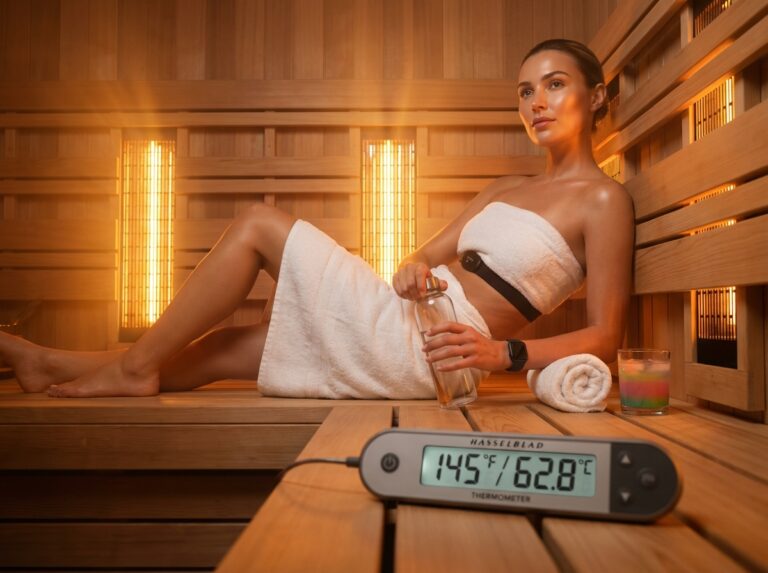
Choosing between traditional and infrared saunas affects recovery strategies, detox claims, and longevity goals. This article explains how each heat modality works, summarizes the science and safety considerations, and delivers practical, evidence-informed protocols for athletes and biohackers. Follow step-by-step routines, monitoring tips, and a decision checklist to select the right sauna approach for your performance and long-term health.
How Heat Works in Traditional and Infrared Saunas
Understanding how heat moves from a source to your body is the first step in choosing the right sauna. Traditional saunas rely on convection. A heater warms the air inside the room, which then circulates and transfers heat to your skin. You also experience conduction when you sit on the wooden benches or touch the walls. If you pour water over the hot stones, you create steam. This process is known as the Finnish löyly. It adds a layer of humidity that changes how the heat feels. Infrared saunas use a different method called radiant heating. They emit light waves from the electromagnetic spectrum. This energy travels through the air without heating it significantly; instead, the energy is absorbed directly by your body, similar to the sun warming your skin on a cold day. Most modern units use far infrared wavelengths, though some premium models now include near and mid infrared. Near infrared ranges from 0.75 to 1.4 micrometers, mid infrared covers 1.4 to 3 micrometers, and far infrared spans from 3 to 1000 micrometers. While there is a common misconception that infrared light penetrates five or six inches into the body, current evidence suggests a more modest depth of 1.5 to 3 inches. This is still sufficient to reach subcutaneous fat layers and muscle tissue.
Temperature and Humidity Dynamics
The environment inside these two types of saunas differs significantly. Traditional saunas in the United States typically operate between 150 and 195 degrees Fahrenheit (65 to 90 degrees Celsius). Humidity levels usually sit between 10 and 20 percent, though adding steam can spike humidity, preventing sweat from evaporating quickly and making the air feel much hotter than the thermometer suggests. This environment increases your sweat rate by 20 to 30 percent compared to dry heat. Infrared saunas operate at much lower temperatures, usually staying between 110 and 140 degrees Fahrenheit (43 to 60 degrees Celsius). The humidity is very low, often between 0 and 5 percent. Because the air is cooler and drier, users can typically stay inside longer. A typical infrared session lasts 30 to 45 minutes, whereas a traditional session is more intense and usually lasts 10 to 15 minutes. The Best Home Saunas 2025: Traditional vs Infrared Buyer’s Guide highlights that these environmental differences often dictate which unit a person chooses for their home.
Cardiovascular and Thermoregulatory Responses
Both types of heat trigger significant changes in heart and blood vessel function. In a traditional sauna, heart rate can climb to 120 or 150 beats per minute, mimicking the strain of moderate aerobic exercise. Infrared saunas cause a more gradual rise, with heart rates usually reaching 100 to 130 beats per minute. Both modalities cause peripheral vasodilation, widening blood vessels near the skin surface to dissipate heat and increasing skin blood flow by 200 to 300 percent. The body also initiates thermoregulatory sweating. In a traditional sauna, you might lose 1.5 liters of sweat per hour, while infrared saunas produce about 1 liter per hour due to the lower ambient temperature. Blood pressure often drops after leaving the sauna, with studies showing a systolic reduction of 10 to 15 mmHg. Heart rate variability (HRV) also responds to the heat; a 2024 study indicated that HRV improves during the recovery phase after a session. Traditional saunas seem to have a slightly more pronounced effect on HRV, likely due to the higher thermal stress. Dehydration is a risk in both settings, requiring diligent replacement of fluids and electrolytes.
Molecular and Cellular Impact
The biological benefits of sauna use occur at the cellular level. Heat triggers the production of heat shock proteins (HSPs), including HSP70 and HSP90. These proteins act as chaperones, helping to repair damaged structures and prevent protein misfolding. A 30-minute session can increase these proteins by two to five times. Traditional saunas are well known for triggering mitochondrial biogenesis—the creation of new mitochondria—through the activation of the PGC-1 alpha pathway, a finding supported by rodent studies from 2022. Infrared heat may have a unique impact on inflammatory cytokines; some data suggests it can lower IL-6 levels by 20 to 40 percent post-session. There is also interest in autophagy, the process where cells clean out damaged components. Evidence for autophagy is strong in traditional sauna research but remains preliminary for infrared use. While we know heat therapy works, clinical trials are still mapping exactly how specific pathways respond to different wavelengths.
Comfort and User Tolerability
Choice often depends on heat tolerance. Athletes frequently prefer the intense heat of a traditional sauna for heat acclimation before competing in hot climates, which can improve sweat efficiency by 25 percent after a few weeks. Conversely, older adults or those with sensitive skin often find infrared more comfortable. The lower air temperature makes breathing easier and feels less suffocating than a steamy traditional room. Those with low heat tolerance can start with short infrared sessions and build up slowly. The cumulative heat dose is what matters for long-term health; you can achieve a similar dose from a short, hot traditional session or a longer, warm infrared session. The How Much Electricity Does An Infrared Sauna Use? 2025 Guide notes that infrared units are also more energy-efficient, using about 75 percent less electricity, making them popular for daily biohacking routines.
Practical Takeaways for Users
Novices should start with an infrared sauna set to 110 or 120 degrees Fahrenheit for 15 to 20 minutes. If choosing a traditional sauna, start at 150 degrees for only 5 to 10 minutes. Experienced users can push traditional saunas to 170 or 185 degrees, often performing two or three rounds of 15 minutes each, separated by a cold shower. Athletes should use infrared saunas at 130 degrees for 30 to 40 minutes, ideally after a workout to aid recovery. According to the Infrared Saunas Market Size and YoY Growth Rate, 2025-2032, the traditional infrared segment remains the most popular for home use due to its balance of comfort and effectiveness. Always listen to your body; if you feel dizzy or nauseated, leave the room immediately. Longevity benefits require consistency: aim for at least three to four sessions per week. Finnish data suggests that four to seven sessions per week provide the greatest protection for the heart and brain.
Evidence and Citation Guidance
When evaluating primary sources, distinguish between the two research types. Use the Finnish Kuopio Ischemic Heart Disease Risk Factor Study for traditional sauna data; this multi-decade study of thousands of men provides the best evidence for cardiovascular health and longevity. For infrared saunas, look for randomized controlled trials focused on recovery and vascular function. A significant study from March 2025 in Frontiers in Cardiovascular Medicine showed that infrared use can improve endothelial function similarly to aerobic exercise. Mechanistic studies are useful for understanding heat shock proteins and mitochondrial changes. Be cautious with claims about detoxing heavy metals. While sweat contains trace amounts of toxins, the kidneys and liver perform the vast majority of filtration. Sweat-based clearance is a supplemental process. Always prioritize peer-reviewed human trials over animal studies or marketing materials.
Protocols for Recovery Detox and Longevity
Using heat as a tool for health requires a plan that matches your specific goals. Recovery after a hard workout looks different than a program designed for heart health or long-term longevity. Infrared saunas excel at deep tissue penetration for muscle repair, while traditional saunas offer the intense heat needed for cardiovascular conditioning. Evidence from late 2025 shows that frequent use of either type can improve vascular function, though the most robust data for life extension still comes from high-heat traditional Finnish practices.
Core Goals and Expected Outcomes
Each protocol serves a distinct purpose. Acute post-workout recovery focuses on lowering muscle soreness and clearing metabolic waste, leading to reduced inflammation and better sleep. Heat acclimation helps athletes perform in hot environments by increasing sweat efficiency. Longevity protocols aim for heart health and brain protection, relying on a cumulative heat dose over weeks and months. Sweat-based detox is a supportive measure; it helps clear small amounts of heavy metals but does not replace the work of your kidneys or liver.
Pre-Session Preparation and Safety Screening
Preparation starts an hour before you enter the sauna. Drink 16 to 20 ounces of water mixed with 300 to 500 milligrams of sodium to help your body retain fluid. Avoid heavy meals right before a session; a light snack is acceptable. Screen yourself for medical risks: do not use a sauna if you have uncontrolled high blood pressure or unstable heart conditions. If you recently had a heart attack, wait at least six weeks and consult a doctor. Pregnant women should avoid sauna use due to core temperature risks. People with implanted medical devices should stick to low-EMF infrared units. Avoid bringing phones or tablets inside, as the heat can damage batteries and internal circuits.
Specific Protocols for Infrared Saunas
Infrared heat is gentler on the lungs, making it ideal for longer sessions focused on recovery.
Athlete Post-Workout Recovery
Set the temperature between 120 and 130 degrees Fahrenheit. Stay for 30 minutes in a single round. This duration allows the radiant heat to reach deeper tissues. Focus on nasal breathing to keep your nervous system calm. After the session, cool down slowly and drink 24 ounces of water with electrolytes. This protocol helps lower creatine kinase levels, a marker of muscle damage.
Detox Support Session
Use a temperature of 130 degrees Fahrenheit for 40 minutes. Wear lightweight cotton clothing to soak up sweat, preventing toxins from being reabsorbed by the skin. Focus on hydration before and after. Remember that sweat only clears a tiny fraction of toxins; your primary goal is supporting circulation to the organs that handle filtration.
Traditional Sauna Protocols for Performance
Traditional saunas provide a more intense challenge to the heart, which is better for building endurance and heat tolerance.
Athlete Heat Acclimation Program
This program takes two to four weeks. In the first week, spend 10 minutes daily at 150 degrees Fahrenheit. In the second week, increase the time to 15 minutes. By the third week, aim for 20 minutes at 180 degrees Fahrenheit. Track your resting heart rate; a drop of 10 to 15 beats per minute during rest often signals successful adaptation. Your body will start sweating sooner and more efficiently.
Biohacker Longevity Program
Frequency is the most important factor for longevity. Aim for four to seven sessions per week. Each session should last 15 to 20 minutes at 175 degrees Fahrenheit. This follows the Finnish model linked to a 50 percent lower risk of fatal heart disease. The goal is a cumulative weekly heat dose of at least 80 to 140 minutes. Traditional saunas are often preferred for this because they trigger higher levels of heat shock proteins.
Contrast Therapy and Hot Cold Cycles
Contrast therapy involves moving between extreme heat and cold to create a “pump” effect for your blood vessels. Start with 10 minutes in the sauna, followed by a two to three-minute cold shower or immersion at 50 degrees Fahrenheit. Repeat this cycle three times. Always end on cold to reduce inflammation, or end on heat to stay relaxed. Be careful if you have low blood pressure, as moving from hot to cold can cause dizziness or fainting.
Safety Monitoring and Wearable Data
Listen to your body over any device. Stop immediately if you feel dizzy or nauseated. An excessive rise in heart rate is a sign to exit. If your heart rate exceeds 85 percent of your maximum, you are pushing too hard. You can use wearables like a Whoop or Oura ring to track recovery. Look at your Heart Rate Variability (HRV) the next morning; if your HRV drops more than 20 percent from your baseline, take a day off from the heat. High-quality infrared vs traditional sauna data suggests that traditional heat causes a larger temporary drop in HRV but a stronger rebound later.
Post-Session Hydration and Recovery
You lose a significant amount of salt through sweat. Standard water is not enough for repletion; you need a mix of sodium and potassium.
Quick Electrolyte Recipe
Mix 32 ounces of water with half a teaspoon of sea salt and one-quarter teaspoon of a potassium-based salt substitute. Alternatively, use commercial packets that provide 1,000 milligrams of sodium. Drink this slowly over the hour following your session.
Adaptations for Special Populations
Older adults should start with infrared saunas at 110 degrees Fahrenheit, limiting sessions to 15 minutes until they know how their heart responds. Beginners should follow a ramp-up plan, adding five minutes to their session time each week. People on medications need extra caution; diuretics and beta-blockers interfere with how the body cools itself, increasing the risk of heat stroke. Always consult a provider if you take these drugs.
Weekly Sample Schedules
These schedules help you balance sauna use with a busy life.
| User Type | Frequency | Sauna Type | Duration & Temp | Primary Marker |
|---|---|---|---|---|
| Competitive Athlete | 5x per week | Mixed | 30 min IR / 20 min Trad | HRV Recovery |
| Busy Professional | 3x per week | Infrared | 25 min at 130°F | Sleep Quality |
| Longevity Biohacker | 6x per week | Traditional | 15 min at 180°F | Resting Heart Rate |
Consistency matters more than intensity. If you can only manage three days a week, stick to that; you will still see benefits for your blood pressure and mood. Tracking your progress through resting heart rate or deep sleep minutes will show you how the heat is working. Adjust your protocol as your fitness improves. The goal is to make the sauna a sustainable part of your lifestyle rather than a short-term challenge.
Frequently Asked Questions
Is infrared sauna safer than traditional sauna for the average user?
Safety often depends on your personal heat tolerance and underlying health. Infrared saunas are generally considered more accessible because they operate at lower temperatures, typically between 110 and 140 degrees Fahrenheit. This lower ambient heat reduces the immediate cardiovascular strain compared to traditional saunas that reach 150 to 195 degrees. For individuals with heat sensitivity or those new to heat therapy, infrared provides a gentler entry point. However, traditional saunas are not inherently dangerous for healthy people; they simply require more careful monitoring of hydration and session length due to the intense convective heat. If you have a history of low blood pressure or fainting, the milder environment of an infrared cabin is likely the better choice. You can find more details on these differences in this guide on Infrared vs. Traditional Sauna: Differences & Which is Best.
- Action Points
Start with infrared if you have a low tolerance for high heat. Limit traditional sessions to 10 minutes initially to test your response. - Evidence Notes
Research shows infrared heart rate rises to 100 to 130 beats per minute. Traditional sessions can push heart rates to 150 beats per minute, which is similar to moderate exercise.
Which sauna type provides better cardiovascular benefits and has stronger longevity evidence?
Traditional Finnish saunas currently hold the gold standard for long-term longevity data. The Kuopio Ischemic Heart Disease Risk Factor Study has followed thousands of men for decades, showing that frequent use of traditional saunas (four to seven times per week) correlates with a 50 percent lower risk of fatal cardiovascular disease. Infrared technology is newer, so it lacks these multi-decade epidemiological studies. That said, 2025 research published in Frontiers in Cardiovascular Medicine suggests that infrared sessions improve vascular function at a level equivalent to aerobic exercise. Both types trigger heat shock proteins and improve endothelial function. If you want the most proven path to a longer life, traditional sauna has the data. If you want modern vascular support with less intensity, infrared is a valid alternative.
- Action Points
Prioritize traditional sauna if your primary goal is matching the specific protocols used in longevity studies. Use infrared if you need a daily routine that is easier to sustain without exhaustion. - Evidence Notes
A 2023 meta-analysis confirmed that regular sauna bathing reduces all-cause mortality by 27 percent. Most of this data comes from traditional high-heat settings.
Can saunas actually detox heavy metals or chemicals through sweat?
The idea of a full-body detox through sweat is often exaggerated. Your kidneys and liver perform the vast majority of detoxification in the body. Sweat does contain trace amounts of heavy metals like lead, cadmium, and arsenic, but the volume is small. Studies indicate that sweat clears less than 1 percent of total body toxins. Infrared saunas are often marketed as superior for detox because they penetrate the skin up to 3 inches, potentially mobilizing toxins stored in fat tissues. While this mechanism is plausible, human clinical trials remain limited. Sauna use should be viewed as a supportive tool for your natural filtration systems rather than a primary detox method. It helps by increasing circulation and supporting lymphatic drainage, which assists the liver and kidneys in their work.
- Action Points
Focus on high-quality hydration and fiber intake to support your primary detox organs. Use the sauna to supplement this process. - Evidence Notes
Evidence for sweat-mediated clearance is mixed. Some studies show 0.1 to 1 percent clearance of lead, but clinical significance is still debated.
How long and how hot should I go for recovery versus longevity?
The goals of recovery and longevity require different approaches to heat. For athletic recovery, infrared is often preferred at 120 to 130 degrees for 30 to 40 minutes. This longer, lower-heat session helps reduce muscle soreness and markers like creatine kinase. For longevity and cardiovascular conditioning, the traditional approach is more effective. This involves 15 to 20 minutes at 170 to 185 degrees. The higher temperature is necessary to trigger the significant rise in core body temperature that leads to the production of heat shock proteins. If you are using infrared for longevity, you may need to extend your sessions to 45 minutes to achieve a similar internal temperature rise as a 15-minute traditional session.
- Action Points
Use 30-minute infrared sessions for post-workout soreness. Use 20-minute traditional sessions for heart health. - Evidence Notes
Heat shock proteins increase 2 to 5 fold after 30 minutes of exposure in both types. Traditional saunas reach this threshold faster due to higher ambient air temperature.
Is it better to sauna before or after training and how does that affect performance?
Sauna use after training is almost always the better choice for performance and recovery. A 2024 study showed that post-workout heat therapy increases recovery markers by 24 percent. It enhances blood flow to tired muscles and helps clear metabolic waste. Using a sauna before training can be risky because it induces dehydration and increases your core temperature before you even start moving. This can lead to early fatigue and a higher perceived rate of exertion. The only exception is a very brief 5-minute warm-up to increase joint mobility, but even then, a dynamic physical warm-up is usually superior. For athletes, the post-training session acts as a passive recovery tool that also helps with heat acclimation.
- Action Points
Schedule your sauna sessions for immediately after your workout or in the evening. Avoid sessions within 4 hours before intense exercise. - Evidence Notes
Post-workout infrared use at 130 degrees for 30 minutes has been shown to decrease muscle damage markers.
How often should I sauna each week to get measurable benefits?
Consistency is more important than intensity when it comes to measurable health markers. To see improvements in resting heart rate and heart rate variability, a minimum of three sessions per week is required. The most significant benefits for longevity and stroke prevention appear at the four to seven sessions per week mark. If you only sauna once a week, you might feel relaxed, but you are unlikely to trigger the long-term physiological adaptations like increased blood volume or improved mitochondrial biogenesis. For busy professionals, three 25-minute infrared sessions per week is a realistic and effective starting point. Athletes may benefit from five sessions per week to maintain heat acclimation and recovery speed.
- Action Points
Aim for at least 57 minutes of total sauna time per week spread across 3 or 4 sessions. Track your resting heart rate to see improvements over a month. - Evidence Notes
Finnish data shows a 61 percent reduction in stroke risk for those using the sauna 4 to 7 times weekly compared to once weekly.
What are the main safety risks and who should avoid saunas entirely?
The primary risks are dehydration, heat exhaustion, and a sudden drop in blood pressure. People with unstable cardiovascular conditions, such as recent heart attacks within the last six weeks or uncontrolled hypertension, must avoid saunas. If your blood pressure is consistently above 160 over 100, heat therapy is contraindicated until it is managed. You should also avoid saunas if you are under the influence of alcohol, as it severely impairs your body’s ability to regulate temperature and increases the risk of fainting. Certain medications like diuretics or beta-blockers can interfere with sweating and heart rate responses, making sauna use dangerous without medical supervision.
- Action Points
Check your blood pressure before starting a new protocol. If you feel dizzy or nauseous, exit the sauna immediately. - Evidence Notes
Alcohol is involved in a large percentage of sauna-related accidents and deaths in Europe.
Can children and pregnant people use saunas safely?
Current medical guidelines are conservative regarding these groups. The American College of Obstetricians and Gynecologists (ACOG) recommends that pregnant people avoid saunas because excessive core temperature rise can be harmful to fetal development, especially in the first trimester. For children, the ability to thermoregulate is not fully developed until after age 12. Children sweat less efficiently and their core temperature rises much faster than adults. While some cultures introduce children to mild sauna use early, it is generally recommended to wait until they are older or to keep sessions extremely short and at very low temperatures under strict supervision. Always consult a pediatrician or obstetrician before considering heat therapy for these populations.
- Action Points
Pregnant individuals should stick to warm baths below 100 degrees. Keep children out of high-heat environments until they are at least 12 years old. - Evidence Notes
ACOG 2023 guidelines specifically list saunas as an activity to avoid during pregnancy to prevent hyperthermia.
How do I monitor recovery and when should I stop a session?
You should use both subjective feelings and objective metrics to stay safe. Subjectively, if you feel lightheaded, have a throbbing headache, or feel an unusual sense of panic, you need to stop. Objectively, you can use wearables like an Oura ring or Whoop strap to monitor your heart rate and heart rate variability. If your heart rate exceeds 85 percent of your age-predicted maximum, it is time to exit. Another key metric is your heart rate variability (HRV) the morning after a session. If your HRV drops by more than 20 percent from your baseline, you may be overdoing the heat stress and need a rest day. Monitoring your sweat rate by weighing yourself before and after a session can also help you understand your hydration needs.
- Action Points
Exit the sauna if your heart rate stays above 150 beats per minute for an extended period. Use a wearable to track sleep quality and recovery scores. - Evidence Notes
A 2024 study showed that HRV improves significantly post-sauna when the dose is appropriate, but declines if the heat stress is too high.
How do I pick between installing an infrared cabin or using a gym traditional sauna?
This choice usually comes down to budget, space, and personal preference for the heat experience. Infrared cabins are much easier for home installation. They often plug into a standard 110V outlet and have a smaller footprint, roughly 4 by 4 feet for a two-person unit. They are also more energy-efficient. You can learn about the costs in this 2025 Guide on Infrared Sauna Electricity Use. Traditional saunas are more expensive to install at home, often requiring 220V wiring and specialized ventilation. However, many people prefer the social aspect and the intense steam of a gym’s traditional sauna. If you want convenience and lower operating costs, infrared is the winner. If you want the highest heat and the traditional steam experience, a gym or a high-end home traditional unit is better. For a complete comparison of models, see the Best Home Saunas 2025: Traditional vs Infrared Buyer’s Guide.
- Action Points
Choose infrared for home use if you want to save on electricity and installation. Use gym saunas if you prefer high heat but do not want the maintenance of a home unit. - Evidence Notes
Infrared saunas use about 75 percent less electricity than traditional units. Home infrared units cost between 2,000 and 10,000 dollars, while traditional indoor installs can reach 30,000 dollars.
Final Takeaways and Starter Protocols
While the choice between traditional and infrared saunas depends on your specific health objectives—cardiovascular conditioning versus targeted tissue recovery—success ultimately relies on consistency. To help you begin, the following routines provide a structured framework for your first week. You should adjust these based on how your body responds.
The Beginner Profile
This protocol is for those new to heat therapy. It focuses on building tolerance.
Type: Infrared sauna.
Temperature: 115 degrees Fahrenheit.
Session length: 15 minutes.
Frequency: 2 times per week.
One week plan: Tuesday and Friday sessions. Focus on deep breathing. Stay hydrated before and after.
The Athlete Profile
This protocol focuses on muscle recovery. It helps reduce soreness after training.
Type: Infrared sauna.
Temperature: 130 degrees Fahrenheit.
Session length: 30 minutes.
Frequency: 3 times per week.
One week plan: Monday, Wednesday, and Friday. Schedule sessions immediately after your workout. Use this time for passive stretching.
The Advanced Athlete Profile
This protocol is for heat acclimation. It improves performance in hot environments.
Type: Traditional sauna.
Temperature: 175 degrees Fahrenheit.
Session length: 20 minutes per round.
Frequency: 4 times per week.
One week plan: Monday, Tuesday, Thursday, and Saturday. Perform two 20-minute rounds. Take a 5-minute cool break between rounds.
The Longevity Seeker Profile
This protocol follows the Finnish research for maximum health span.
Type: Traditional sauna.
Temperature: 170 degrees Fahrenheit.
Session length: 15 to 20 minutes.
Frequency: 4 to 7 times per week.
One week plan: Daily sessions. Aim for a cumulative dose of at least 80 minutes per week. Keep the humidity around 15 percent.
The Biohacker Profile
This protocol uses mixed modalities. It tracks physiological data for optimization.
Type: Mixed (Traditional and Infrared).
Temperature: Variable.
Session length: 20 to 40 minutes.
Frequency: 5 times per week.
One week plan: Three infrared sessions for recovery. Two traditional sessions for cardiovascular stress. Track your heart rate variability every morning.
Safety Reminders and Red Flags
Safety is the most important part of any heat protocol. You must listen to your body. Stop immediately if you feel dizzy, nauseous, or develop a headache; these are signs of heat exhaustion. Never use a sauna if you have consumed alcohol, as it impairs temperature regulation and increases fainting risk.
People with certain health conditions must be cautious. Avoid saunas if you are pregnant, have uncontrolled high blood pressure, or have had a recent heart attack. If you have a pacemaker, consult your doctor before using an infrared sauna, as some models may interfere with the device. Always hydrate with 16 to 20 ounces of water before you enter and add electrolytes to your water after the session to replace lost sodium and potassium.
Metrics to Track Improvements
You should monitor specific data points to see if the protocol is working. Use a wearable device to track these metrics over a four-week period.
- Resting Heart Rate: Look for a decrease of 5 to 10 beats per minute. This indicates improved cardiovascular efficiency.
- Heart Rate Variability (HRV): An increase in HRV suggests better recovery and a balanced nervous system.
- Sleep Quality: Many users report an increase in deep sleep. Track your sleep stages to confirm this.
- Perceived Recovery: Note how sore you feel after workouts and your energy levels throughout the day.
- Sweat Onset: As you acclimate, you will begin to sweat sooner. This is a sign of improved thermoregulation.
Final Recommendations and Next Steps
The best way to start is with a four-week experiment. Choose the sauna type that fits your current lifestyle. If you have access to a gym with a traditional sauna, start there. If you prefer privacy and convenience, look into a home infrared unit. Before you begin, consult with a healthcare provider, especially if you take medications for blood pressure or heart health.
Consider ordering baseline labs. A high-sensitivity C-reactive protein (hsCRP) test can measure systemic inflammation. Tracking this biomarker before and after a month of sauna use can provide objective proof of progress. Start with the beginner protocol and gradually increase your time and temperature as your body adapts. Consistency is more important than intensity; aim for at least three sessions per week to see measurable changes in your health and performance.
Sources
- Infrared Saunas Market Size and YoY Growth Rate, 2025-2032 — In terms of product type, the traditional infrared saunas segment is expected to contribute the highest share of the market with 43.6% in 2025 …
- Best Home Saunas 2025: Traditional vs Infrared Buyer's Guide — The complete guide to choosing, buying, and using saunas in 2025. Compare traditional vs infrared, indoor vs outdoor, barrel vs cabin designs.
- How Much Electricity Does An Infrared Sauna Use? 2025 Guide — Infrared saunas use 75% less electricity than traditional saunas – consuming only 1-3 kWh per hour compared to 6-9 kWh for conventional …
- Infrared vs. Traditional Sauna: Differences & Which is Best — A traditional sauna session usually only lasts for up to 15 minutes due to higher heat. This sauna experience is more hot and steamy than infrared saunas.
- Steam Sauna vs Infrared Sauna | Comparison – Spa World Australia — Infrared saunas ($2,000 – $10,000) are cheaper and easier to install than traditional saunas whne installed inside ($10,000-$30,000). Experience …
- Infrared Sauna vs Traditional Sauna Benefits Explained — The key difference is this: a traditional sauna heats you from the outside in by warming the air first. An infrared sauna heats you from the …
- The Sauna Conundrum: Tradition vs. Infrared — Which Delivers the … — While infrared heat treatments have surged in popularity, sauna purists argue they don't measure up to the centuries-old traditions of true …
- Infrared Sauna vs. Traditional Sauna: Which One Is Better? – GoodRx — The biggest difference between an infrared sauna and traditional sauna is the heating source. Traditional saunas rely on a heater and rocks.
- Traditional vs. Infrared Saunas: What You Need to Know – Art of Steam — Studies suggest infrared saunas may help with blood pressure, pain relief, and recovery—but these effects are also seen in traditional saunas. …
Legal Disclaimers & Brand Notices
The information provided in this article is for informational and educational purposes only and does not constitute professional medical advice, diagnosis, or treatment. Always seek the advice of your physician or another qualified health provider with any questions you may have regarding a medical condition, especially before beginning new heat therapy protocols or if you have underlying cardiovascular issues.
All product names, logos, and brands mentioned in this text are the property of their respective owners. All company, product, and service names used in this article are for identification purposes only. Use of these names, logos, and brands does not imply endorsement.