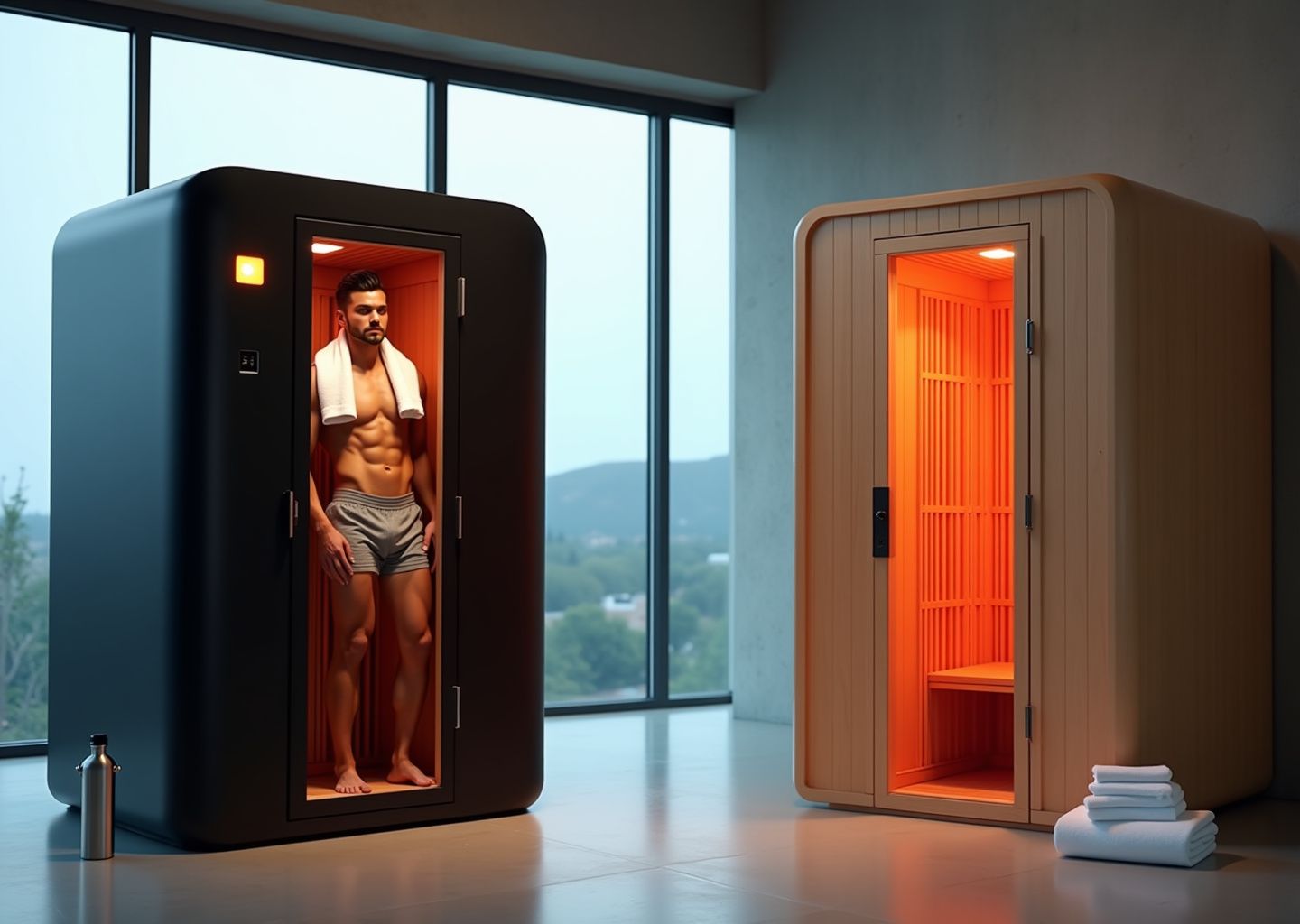
Infrared saunas are a popular recovery and longevity tool, but portable pop-up units and permanent wooden cabins serve different needs. This article compares heater types, build materials, safety, protocols and real-world performance for athletes and biohackers, and gives practical routines and selection guidance to optimize recovery, detoxification and long-term health.
How Infrared Heat Works and Sauna Types
When you decide to bring an infrared sauna into your life, you face a fundamental choice between two very different paths. On one side, you have the portable infrared sauna, a flexible and modern solution designed for convenience. On the other, the traditional wooden cabin, a permanent wellness fixture that offers a more immersive experience. This isn’t just about features; it’s about how a sauna will fit into your space, your budget, and your lifestyle.
The Case for Portable Infrared Saunas
Let’s start with the most obvious advantage of portable saunas, whether they’re the foldable tent style or the compact chair units. They are incredibly accessible. The upfront cost is a fraction of a wooden cabin, making them a fantastic entry point into infrared therapy.
Beyond price, their biggest selling point is their practicality for modern living. They have a tiny footprint, often just a few square feet, making them perfect for apartments or homes without a dedicated wellness room. Assembly is usually a breeze, taking less than 30 minutes with no special tools required. When you’re done, you can fold it up and slide it under a bed or into a closet. This flexibility is unmatched. They also run on a standard household outlet, so you won’t need to hire an electrician for a special 240V circuit, which is a common requirement for larger wooden cabins.
The Drawbacks of Portability
Of course, these conveniences come with trade-offs. The most significant compromise is the heat experience itself. Most portable models are designed with an opening for your head, which means you aren’t getting true, full-body heat exposure. This can limit the systemic benefits, like the robust production of heat shock proteins, that come from elevating your entire body’s core temperature.
Heat performance is another key difference. Portable units have minimal insulation and can struggle to maintain temperature consistently, which can make for a less intense session compared to the deep, radiant heat of a wooden cabin. Durability is also a concern. With zippers, fabric walls, and lightweight frames, their expected lifespan is much shorter than the decades you can expect from a well-built cabin.
The Enduring Appeal of Wooden Cabins
A wooden infrared sauna is an investment in a dedicated wellness space. The experience is simply on another level. Being fully enclosed in a cabin made of thick, insulating wood like cedar or hemlock creates a stable and deeply penetrating heat environment. These units can sustain higher, more stable temperatures, and the wood itself absorbs and radiates the infrared energy, surrounding you with warmth. This complete immersion is ideal for maximizing the physiological benefits athletes and biohackers seek.
Built from solid wood, these cabins are incredibly durable and built for long-term use. They offer a quiet, insulated, and spacious environment that feels more like a retreat. The build quality is reflected in longer warranties, typically covering heaters and wood for 5 to 7 years.
The Commitment of a Cabin
The primary barrier to owning a wooden cabin is the commitment. The cost is a substantial investment, and they require a permanent, dedicated spot in your home and can’t be easily moved. Installation is a project, taking anywhere from a few hours to a full day. And as mentioned, many larger models require a dedicated electrical circuit, adding to the final cost. The preheating time is also longer, usually 30 to 45 minutes, requiring more planning for each session.
Ultimately, the choice comes down to your priorities. If your goals are maximizing therapeutic outcomes and creating a permanent wellness sanctuary, and you have the space and budget, a wooden cabin is the superior choice. If you’re constrained by budget or space, or if you value flexibility and just want to start incorporating infrared heat into your routine, a portable sauna is an effective and practical solution.
Practical pros and cons of portable infrared saunas
Portable infrared saunas, often seen as foldable tents or single-person chair boxes, represent the most accessible entry point into heat therapy. Their construction is simple, typically involving a reflective fabric shell stretched over a collapsible frame with thin carbon heating panels stitched into the walls. This design creates a small, effective heated volume that warms up quickly, usually in under 15 minutes. However, the minimal insulation means these units struggle to retain heat and rarely sustain temperatures above 150°F, with most operating comfortably in the 120°F to 140°F range. The heater placement is crucial; panels are usually located on the sides and back, which can create uneven heating depending on your seating position relative to the emitters.
The practical advantages are compelling, especially for those with limited space or budget. Affordability is the primary draw, with most units costing between $300 and $2,000 in 2025, depending on size and features. Their small footprint allows them to be used in an apartment living room and stored in a closet. Setup is fast, often taking less than 30 minutes, and they plug into a standard household outlet, requiring no special electrical work. This portability makes them a viable option for renters, frequent movers, or even athletes who want to take a sauna on the road for training camps or competitions. The low profile also means they easily fit in rooms with standard or low ceilings, a significant advantage over taller wooden cabins.
Of course, these benefits come with significant trade-offs. The most obvious drawback is the incomplete whole-body exposure. Most designs require your head to remain outside the unit, which prevents the full systemic response that comes from total body heating. The lower operating temperatures and rapid heat loss mean the experience is less intense and immersive. Durability is another concern; zippers can fail, fabrics can tear, and the electronic components are generally less robust than those in permanent cabins, with a typical lifespan of 3 to 5 years under regular use. Managing sweat and sanitation can also be challenging. The enclosed, non-ventilated space can become humid and stuffy, and fabric liners require frequent washing to prevent odor and bacteria buildup, making them less ideal for shared use.
Safety considerations for portable units are unique. The heating panels can reach surface temperatures hot enough to cause thermal burns if touched directly, so using a towel as a barrier is essential. The combination of condensation from sweat and nearby electronics presents a potential electrical risk, so you should always ensure the unit is dry and in good repair. While the head-out design mitigates CO2 buildup, users should never attempt to fully enclose themselves in a unit not designed for it. EMF exposure is a valid concern, and while many manufacturers claim low-EMF designs, independent tests show levels can vary widely. For those sensitive to EMF, investing in a reliable meter to verify a unit’s output is a worthwhile precaution. You can find expert-tested reviews on sites like Garage Gym Reviews that often include temperature and EMF performance data.
For athletes and biohackers, portable saunas can still be highly effective tools if used correctly. To maximize efficacy, always preheat the unit for at least 15 minutes. Adjust your chair to sit as centrally as possible for even infrared exposure.
- For post-workout recovery
Aim for a 20 to 30-minute session at 130°F to 140°F to help reduce muscle soreness. - For heat acclimation
Use the sauna three times a week for 30 minutes, gradually increasing the temperature toward the unit’s maximum over several weeks. - For longevity and heat shock protein (HSP) induction
Shorter, more frequent sessions of 15 to 20 minutes at 130°F to 150°F, four to five times per week, can be effective.
A proper hydration strategy is non-negotiable; drink plenty of water with electrolytes before and after each session. Warranties are typically short, ranging from one to three years. Regular maintenance is simple but necessary. This includes wiping down the interior after each use, periodically checking that all heating panels are functioning, lubricating zippers to prevent sticking, and washing any removable liners or floor mats weekly.
Practical pros and cons of wooden infrared cabins
While portable saunas offer convenience, wooden infrared cabins represent a more permanent and immersive wellness investment. They are built as semi-permanent fixtures in your home, and their design directly influences the quality and consistency of every session.
The choice of wood is your first major decision. Most quality cabins use Western Red Cedar, Canadian Hemlock, or Basswood. Cedar is the premium choice; it’s naturally resistant to mold and decay, has a low tendency to warp, and releases a pleasant aroma when heated. Hemlock is a more budget-friendly, non-aromatic option that performs well indoors but should be avoided for outdoor use as it’s prone to rot. For those with sensitivities, Basswood is an excellent hypoallergenic alternative with no scent. Cheaper cabins might use pine or fir, which can off-gas volatile organic compounds (VOCs) and warp easily, so it’s best to invest in quality materials from the start.
Inside the cabin, construction details matter. Thick, solid wood walls, often around 40mm, provide superior thermal insulation. This allows the cabin to act as a heat reservoir, maintaining stable temperatures between 140-165°F with minimal fluctuation. Proper ventilation, usually a small adjustable vent near the floor and another on the ceiling, is critical for circulating fresh air and managing humidity. Heater configuration is where performance is truly defined. Most cabins use large carbon fiber wall panels for even, gentle far-infrared heat. Many now integrate floor panels to ensure your feet and lower legs receive direct exposure. For more targeted benefits, high-end models offer full-spectrum heaters that combine near, mid, and far-infrared wavelengths, or dedicated near-infrared (NIR) lamps that provide specific cellular and skin benefits.
The advantages of a wooden cabin are significant.
- Superior Temperature Stability. The insulated structure and powerful heaters create a consistent thermal environment, allowing for longer, more effective sessions without the temperature drops common in portable units.
- Whole-Body Immersion. Being fully enclosed, including your head, ensures every part of your body receives infrared exposure. This is a key difference from head-out portable designs and is crucial for systemic benefits like cardiovascular conditioning.
- Advanced Heater Integration. Cabins have the space and power capacity for more sophisticated heater arrays, including the full-spectrum combinations that biohackers often seek.
- Quiet Operation. With no fans or noisy components, the experience is peaceful and meditative.
- Aesthetics and Resale Value. A well-made wooden sauna is a beautiful piece of furniture that can enhance a room or home gym. They also tend to retain their value, with some estimates suggesting they can hold up to 70% of their original price after five years.
- Long-Term Durability. Built from solid wood and robust components, a quality cabin is designed to last 15 to 25 years, a stark contrast to the 3-5 year lifespan of a heavily used portable tent.
However, these benefits come with notable drawbacks. The upfront cost is substantial, typically ranging from $3,000 to over $15,000. They require a significant footprint, with even a one-person model needing a dedicated 4×4 foot space. Installation is more involved; most cabins require a dedicated 220-240V electrical circuit installed by a licensed electrician, which can add $500 to $1,500 to the total cost. You also need to ensure your floor can support the weight. And, of course, they are not portable.
Safety is paramount with a permanent installation. Always use a qualified electrician who understands local codes and ensures GFCI protection. Maintain adequate ventilation during sessions to prevent CO2 buildup and keep all combustible materials at least 18 inches away from the cabin’s exterior. Routine wood maintenance, like wiping down surfaces after use and applying a non-toxic sealant annually, prevents mold growth and warping.
For specific goals, consider these configurations.
For Athletes
A two-person cabin is ideal for allowing space to stretch. Prioritize large far-infrared carbon panels for deep muscle penetration and sweat induction, with a unit capable of sustaining 150-165°F for effective heat acclimation and recovery.
For Biohackers
Look for a full-spectrum model that includes dedicated near-infrared lamps. This allows you to target skin rejuvenation and mitochondrial function with NIR while still getting the systemic detoxification and cardiovascular benefits of far-infrared.
The lifecycle cost of a cabin, while high initially, can be economical over time, averaging around $0.50 per session over a 20-year lifespan. When choosing a premium cabin, always compare EMF specifications and, if possible, get independent measurements with a reliable meter like a TriField. Look for models that test below 3 milligauss (mG) to ensure you’re minimizing unwanted electromagnetic exposure. Maintenance is straightforward, involving periodic wood care and eventual heater replacement, though carbon panels have a long lifespan of 10,000 to 20,000 hours.
Protocols for recovery detox and longevity by sauna type
Translating the physical differences between portable saunas and wooden cabins into effective routines is key to unlocking their benefits. Your goals dictate the protocol. Below are evidence-grounded strategies for athletes and biohackers, tailored to each sauna type.
Acute Recovery (Post-Workout)
The goal here is to reduce immediate muscle soreness and kickstart the repair process without adding excessive stress to a taxed system. This is best done after moderate intensity workouts, not maximal efforts.
- Portable Sauna Protocol
Use a portable unit for 20-25 minutes at 130-140°F. Since your head is out, the systemic stress is lower, making it a good fit for post-training. The direct far-infrared exposure helps with localized muscle relaxation. Schedule this within 1-2 hours of your workout. - Wooden Cabin Protocol
A cabin session can be slightly longer and hotter due to better heat retention. Aim for 25-30 minutes at 140-155°F. The full-body immersion provides a more systemic effect. If you feel overly fatigued from training, keep the temperature at the lower end of this range.
Pre/Post Actions: Hydrate with 16 oz of water with electrolytes beforehand. Afterward, drink another 24 oz. A cool shower (not an ice bath) can help bring your core temperature down gently. Track subjective soreness and sleep quality. A 30-minute session has been shown to reduce soreness by up to 40% in some athletes.
Delayed Recovery and Inflammation Control
This protocol is for rest days or 24-48 hours after intense training to manage delayed onset muscle soreness (DOMS) and systemic inflammation.
- Portable Sauna Protocol
Longer sessions are effective here. Go for 30-40 minutes at 130-145°F, 3-4 times per week. You can pair this with compression therapy on your legs while in the sauna for enhanced lymphatic drainage. - Wooden Cabin Protocol
Use the cabin for a deeper, more intense session of 35-45 minutes at 150-160°F. This is where contrast therapy shines. Follow your sauna session with a 2-5 minute cold plunge or shower (around 50°F). Studies suggest this combination can accelerate DOMS relief significantly.
Biomarker Tracking: Monitor your resting heart rate (RHR) and Heart Rate Variability (HRV). Consistent use should lead to a lower RHR and higher HRV over several weeks, indicating improved recovery status.
Heat Acclimation for Performance
For athletes competing in hot climates, heat acclimation can be a powerful advantage. This requires progressively increasing your core body temperature.
- Portable Sauna Protocol
A portable unit is less ideal for this goal because the head is typically not enclosed, limiting the potential to raise core body temperature. However, you can still see benefits with 30-40 minute sessions at the maximum temperature (around 140-150°F), 3-5 times per week for 2 weeks leading up to an event. - Wooden Cabin Protocol
This is the superior tool for heat acclimation. Start with 20 minutes at 150°F, 3 times a week. Over two weeks, progressively increase duration by 5 minutes per session and temperature by 5°F, working up to 30-40 minutes at 160-165°F. This safely adapts your body to heat stress.
Detox and Skin Cleansing
While claims about heavy metal detoxification are often overstated (sweat is over 99% water), inducing a deep sweat helps cleanse pores and excrete a small amount of metabolic waste.
- Portable & Wooden Cabin Protocol
The goal is simply to sweat profusely. Both units work well. Aim for a 30-40 minute session at a temperature that feels challenging but tolerable, usually 135°F+ in a portable or 150°F+ in a cabin. Ensure you are well-hydrated before, during, and after. Use a dry brush on your skin before the session to enhance exfoliation.
Longevity and Hormesis Strategies
For biohackers, the focus is on hormesis, creating a mild stress that triggers cellular defense mechanisms like Heat Shock Proteins (HSPs).
- Portable Sauna Protocol
The convenience of a portable sauna makes it perfect for frequent, low-dose sessions. A protocol of 20 minutes at 130-140°F, 4-5 times per week, is excellent for consistent HSP induction and cardiovascular conditioning without requiring a long time commitment. - Wooden Cabin Protocol
Cabins are great for deeper hormetic stress. A session of 30 minutes at a temperature that raises your core body temperature to around 101-102°F (often 155°F+), 2-3 times per week, can activate longevity pathways like FOXO3. For targeted tissue benefits, use full-spectrum cabins with near-infrared (NIR) lamps focused on specific joints or skin areas for the first 10 minutes of your session.
Safety First: Know When to Stop
Always listen to your body. Stop any session immediately if you experience dizziness, nausea, headache, or a rapid, uncomfortable heart rate. Heat therapy is contraindicated for individuals who are pregnant, have uncontrolled hypertension, acute illness, or certain implanted medical devices. Always consult your doctor before beginning a sauna routine if you have any underlying health conditions. A conservative approach is always the best starting point.
Common questions about choosing and using infrared saunas
Are portable saunas as effective as wooden cabins for whole-body heat exposure?
Wooden cabins offer a more complete and uniform heat experience. Because your entire body, including your head, is inside a well-insulated space, the heat is immersive and stable. Portable saunas are highly effective for inducing a deep sweat and delivering infrared waves to the torso and limbs, but since your head is typically outside the unit, you miss the benefits of cranial heat exposure. This can slightly lessen the systemic response, such as the release of brain-derived neurotrophic factor (BDNF). For a detailed breakdown of how different sauna types influence specific outcomes, refer back to the protocols we discussed in the previous chapter. For a direct comparison of the user experience, this Sauna Tent vs Wooden Sauna article offers practical insights.
Risk Caveat: The less uniform heat in a portable unit might mean it takes longer to raise your core body temperature to the level needed for optimal heat shock protein (HSP) production compared to a cabin.
Practical Next Step: If your primary goal is convenience and targeted muscle recovery, a portable sauna is an excellent tool. If you are seeking the most robust, whole-body hormetic stress for longevity and cardiovascular benefits, a wooden cabin is the superior choice.
Why does EMF matter and how can I verify low EMF?
EMF, or electromagnetic fields, are generated by the electrical components in a sauna. While the health risks of long-term exposure are still debated, many biohackers and health-conscious users prefer to minimize exposure to any potential man-made stressors. Low-EMF models use shielding, grounding, and specific wiring configurations to reduce these fields. A widely accepted threshold for low EMF in a sauna is below 3 milligauss (mG).
Risk Caveat: High EMF levels are a theoretical risk. There is no definitive scientific consensus on harm from sauna-level exposure, but minimizing it aligns with a precautionary principle.
Practical Next Step: To verify a manufacturer’s claims, purchase a reliable gaussmeter (like a TriField meter). Measure the EMF levels at various points inside the sauna where your body will be positioned, especially near the heating panels. If the readings are higher than you’re comfortable with, contact the manufacturer or consider returning the unit.
What temperatures are safe for athletes and older adults?
Safe temperatures depend on your health status and heat acclimation. Healthy, conditioned athletes can often tolerate and benefit from temperatures in the 140-165°F (60-74°C) range. Older adults, or anyone new to sauna use, should adopt a more conservative approach and stay within the 120-140°F (49-60°C) range to avoid excessive cardiovascular strain.
Risk Caveat: Pushing the temperature too high, too soon, can lead to dehydration, heat exhaustion, or a dangerous drop in blood pressure.
Practical Next Step: Regardless of your fitness level, start at the lower end of your recommended range. Listen to your body and exit the session if you feel dizzy, nauseous, or unwell. Gradually increase the temperature over weeks as your tolerance improves.
How long should a first-time user stay in an infrared sauna?
Your first session should be short. Aim for 10 to 15 minutes at a moderate temperature of around 110-120°F (43-49°C). This allows your body to adapt to the heat stress without being overwhelmed.
Risk Caveat: Staying in too long during your initial sessions can cause lightheadedness and dehydration, creating a negative first experience.
Practical Next Step: Pay close attention to how you feel during and after the session. If you feel fine, you can gradually add five minutes to your sessions each week, working toward the durations outlined in our protocol chapter.
Can saunas help detox heavy metals or are claims overstated?
These claims are significantly overstated. While sweat does contain trace amounts of toxins and heavy metals, it is composed of over 99% water and electrolytes. Your body’s primary detoxification organs are the liver and kidneys. The main value of sweating in a sauna comes from the physiological benefits of heat stress, not from purging toxins.
Risk Caveat: Relying on a sauna for detoxification can provide a false sense of security and may delay proper medical evaluation if you have genuine concerns about heavy metal toxicity.
Practical Next Step: Focus on the evidence-backed benefits of sauna use, such as improved cardiovascular function and recovery. If you suspect heavy metal exposure, consult a physician for proper testing and treatment.
How to combine sauna sessions with ice baths or cold showers?
This is known as contrast therapy. The standard, effective protocol is to go from hot to cold. After your sauna session, transition directly into a cold shower or an ice bath (around 50°F or 10°C) for 2 to 5 minutes. This cycle can be repeated 2-3 times for enhanced recovery and circulatory benefits.
Risk Caveat: The rapid change in temperature places significant demand on your cardiovascular system. This practice is not recommended for anyone with a heart condition or uncontrolled hypertension.
Practical Next Step: If you are new to contrast therapy, start with a cool or lukewarm shower instead of an ice bath. Gradually decrease the water temperature over several weeks as your body adapts to the shock.
Is it safe to use a sauna after intense exercise?
Yes, with proper precautions. It can aid recovery, but you must allow your body to cool down slightly and rehydrate first. Wait at least 15-20 minutes after your workout for your heart rate to decrease. Drink 16-20 ounces of water with electrolytes *before* you get in.
Risk Caveat: Entering a sauna in a dehydrated state with a very high heart rate post-exercise increases the risk of heat exhaustion and cardiac events.
Practical Next Step: Monitor your body. If you feel your heart racing or feel unwell, end the session. As we covered in the protocols chapter, scheduling sauna use on rest days or after lighter training sessions is often a safer and equally effective approach.
What maintenance is required and how long do heaters last?
Maintenance is minimal. For portable saunas, wipe down the interior surfaces and any removable liners after each use. For wooden cabins, use a damp cloth on benches and floors to remove sweat. Avoid using harsh cleaning chemicals, as they can be absorbed by the wood and released during heating. The carbon or ceramic heaters are built to last, with typical lifespans of 10,000 to 20,000 hours, easily lasting over a decade with daily use.
Risk Caveat: Poor ventilation and infrequent cleaning in a wooden cabin can create an environment for mold or mildew growth.
Practical Next Step: Ensure your wooden sauna has adequate ventilation. Always check the manufacturer’s warranty on heaters and electrical components, which is a good indicator of quality.
Are there special electrical requirements for wood cabins?
Yes, almost always. While most portable saunas plug into a standard 120V household outlet, wooden cabins typically require a dedicated 240V circuit, similar to what is used for an electric oven. This requires installation by a qualified electrician.
Risk Caveat: Attempting to wire a 240V sauna yourself without proper knowledge is a serious fire and electrocution hazard.
Practical Next Step: Before purchasing a wooden cabin, get a quote from an electrician. This cost (often $500-$1,500) should be factored into the total price of your sauna setup.
What about using saunas with heart conditions or medications?
This requires extreme caution and is a decision that must be made with your doctor. The heat from a sauna increases heart rate and causes vasodilation (widening of blood vessels), which can affect blood pressure and interact with medications like beta-blockers or diuretics.
Risk Caveat: Sauna use is generally not recommended for individuals with unstable heart conditions, severe aortic stenosis, or those who have had a recent heart attack.
Practical Next Step: Do not use a sauna if you have a known heart condition without explicit approval from your cardiologist. If you get approval, start with very short durations (5 minutes) at low temperatures (110°F) and never use the sauna alone.
Final recommendations and results
Choosing the right sauna comes down to your specific goals, budget, and lifestyle. Let’s break down the best choice for three common user profiles.
Recommendations for Your Goals
The Traveling Athlete on a Budget.
Your choice is clear: a portable infrared sauna. For anyone who needs recovery on the road or lives in a small apartment, the convenience is unmatched. You can set it up in under 30 minutes and store it easily. While the heat exposure isn’t as immersive as a cabin because your head is often outside, it’s highly effective for post-workout muscle soreness and promoting relaxation. Look for a model with durable carbon heaters and a simple, quick-fold design. The lower upfront cost, typically under $2,000, makes it an accessible entry point into infrared therapy without a major commitment.
The Committed Home Athlete or Biohacker.
If you’re building a dedicated recovery space, a wooden infrared cabin is the superior long-term investment. The full-body, immersive heat provides a more intense and efficient session, which is ideal for deep recovery and heat acclimation protocols. Cabins offer better heat retention, more stable temperatures, and a much longer lifespan, often exceeding 15 years. You’ll need a dedicated space and potentially a 220-240V electrical circuit, but the performance and durability justify the higher cost and installation effort. This is the cornerstone of a serious home wellness setup.
The Longevity-Focused User Prioritizing Purity.
Your focus should be on a low-EMF, full-spectrum wooden cabin made from non-toxic materials like cedar or basswood. For longevity protocols targeting cellular health, controlling variables is key. A cabin provides the most controlled environment. Prioritize brands that offer third-party verification of their EMF levels, aiming for readings under 3 milligauss (mG). Full-spectrum heaters, which combine near, mid, and far infrared, offer a broader range of potential benefits, from skin health to deeper tissue penetration. This is a premium choice where material quality and verified safety specifications are non-negotiable.
Decision Matrix at a Glance
| Factor | Portable Sauna | Wooden Cabin |
|---|---|---|
| Portability | Excellent (folds for storage, travels easily) | Poor (permanent or semi-permanent installation) |
| Budget | Low ($300 – $2,000) | High ($3,000 – $15,000+) |
| Heat Quality | Good (direct heat, less immersive) | Excellent (even, immersive, full-body heat) |
| Installation | Very Easy (under 30 minutes, no tools) | Complex (requires hours, possibly an electrician) |
| Safety (EMF) | Variable (requires careful selection for low-EMF) | Good (easier to find certified low-EMF models) |
| Best For | Travel, small spaces, budget-conscious users | Dedicated home use, optimal performance, longevity |
Practical Buying Tips
When comparing models, focus on these core specifications.
- Heater Type. Carbon heaters provide a more even, gentle heat distribution, while ceramic heaters can get hotter faster. Full-spectrum heaters are a premium option that combines all three infrared wavelengths. For most recovery goals, carbon is an excellent and efficient choice.
- Wattage per Cubic Foot. This measures the sauna’s power relative to its size. Look for a ratio of 15 to 20 watts per cubic foot for effective heating.
- EMF Specifications. Reputable brands will provide EMF readings. Aim for magnetic field levels below 3 mG at point of use. If a brand doesn’t list their EMF specs, be cautious.
- Warranty and Return Policy. A solid warranty reflects the manufacturer’s confidence. Expect 1-3 years for portables and 5-10 years (or lifetime on some components) for wooden cabins. A 30 to 60-day return policy gives you time to ensure it’s the right fit.
- Ventilation. For wooden cabins, proper ventilation is essential for air quality. Ensure the model includes adjustable vents to circulate fresh air.
Checklist for Your First Session
- Hydrate well with water and electrolytes before entering.
- Set the temperature to a conservative 110-120°F (43-49°C).
- Limit your first session to 10-15 minutes.
- Listen to your body. If you feel dizzy or unwell, end the session immediately.
- Cool down gradually afterward. Avoid jumping into a cold shower right away.
Managing Expectations and Measuring Results
An infrared sauna is a powerful tool, not a magic bullet. Reasonable expectations include improved muscle recovery, reduced soreness, better sleep quality, and long-term cardiovascular benefits from consistent use. Be skeptical of claims about rapid “heavy metal detox,” as the primary benefits come from supporting your body’s natural systems, not from purging significant amounts of toxins through sweat.
The best way to gauge effectiveness is to measure your own results. Use a wearable device to track changes in your sleep quality, resting heart rate, and Heart Rate Variability (HRV) over several weeks. Pay attention to how you feel during workouts and your overall energy levels. Finally, always consult with your healthcare provider before starting a sauna routine, especially if you have a heart condition, are pregnant, or take medications.
References
- Sauna Tent vs Wooden Sauna: : The Honest Comparison You Need — While not as portable as a sauna tent, a wooden sauna is exceptionally stable, even in strong winds and snowstorms. Comfort and User Experience.
- Portable Sauna vs Traditional Sauna: Which Is Best? – Terra Wellness — This snapshot makes the trade-offs easy to scan: portable saunas minimise space and setup, while traditional saunas reach higher temperatures …
- Best Home Saunas 2025: Traditional vs Infrared Buyer's Guide — The complete guide to choosing, buying, and using saunas in 2025. Compare traditional vs infrared, indoor vs outdoor, barrel vs cabin designs.
- Steam Sauna vs Infrared Sauna | Comparison – Spa World Australia — Infrared saunas generally cost less to run than steam saunas because they: Operate at lower temperatures; Heat up faster; Use less electricity …
- Expert-Tested: Best Portable Saunas (2025) – Garage Gym Reviews — … Infrared Sauna is an inexpensive and portable solution for an infrared sauna. … Portable saunas are also more affordable than a traditional sauna cabin.
- The 8 Best Outdoor Saunas of 2025 (Buyer's Guide) — Find the best outdoor sauna for your home with this friendly buyer's guide, featuring top picks, expert tips, and advice for every budget …
- Portable Woodfired Saunas vs Infrared Saunas: Which is Best? — But some differences: Woodfired Sauna: Intense sweat from ambient high heat. Deep relaxation, meditative experience.
- The Complete Guide to Owning a Personal Sauna in 2025 – KYFE — Both setups offer health benefits, from muscle recovery to improved sleep, but the sensory experience of an outdoor sauna, especially one with a …
Legal Disclaimers & Brand Notices
Medical Disclaimer: The content provided in this article, including protocols, temperature recommendations, and discussions of physiological effects (such as heat shock protein induction, recovery, and cardiovascular benefits), is for informational and educational purposes only. It is not intended to be a substitute for professional medical advice, diagnosis, or treatment. Always seek the advice of a qualified healthcare provider, such as a physician or cardiologist, before starting any new health routine, especially if you have pre-existing medical conditions (including but not limited to hypertension, heart conditions, or pregnancy) or are taking medications.
Assumption of Risk: Engaging in heat therapy, including the use of infrared saunas, carries inherent risks, including dehydration, heat exhaustion, and cardiovascular strain. You assume all responsibility and risk for the use of the information provided herein.
Trademark Acknowledgement: All product names, logos, and brands mentioned in this article are the property of their respective owners. Their use does not imply any affiliation with or endorsement by the trademark holders.