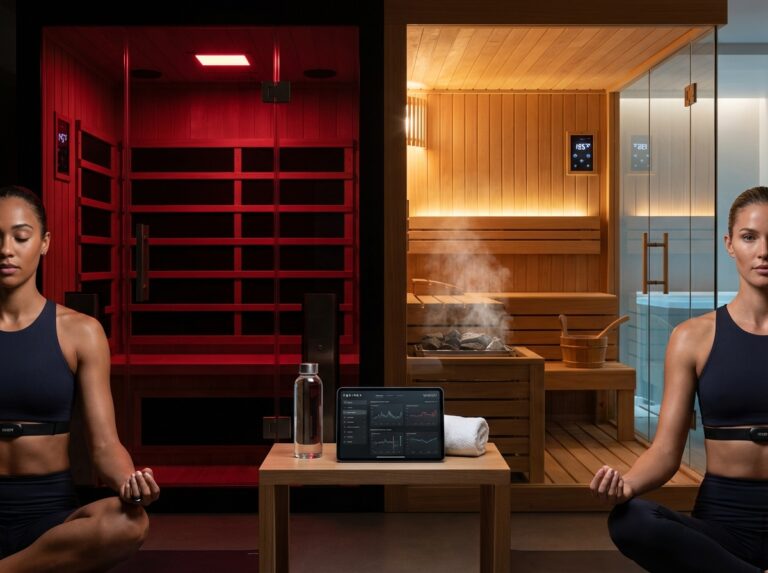
Infrared saunas can accelerate recovery, support detox pathways, and promote longevity when used with the right temperatures, durations, and safety practices. This article breaks down physiologic mechanisms, evidence-based temperature and time ranges, athlete and biohacker routines, safety monitoring, and practical protocols you can adopt for performance gains and long-term health.
How Infrared Heat Works and What Temperatures Mean for Benefits
Infrared heat operates differently than the hot air in a traditional sauna. While traditional saunas rely on convection to heat the air around you, infrared saunas use light to heat your body directly through a process known as resonant absorption. The water molecules in your cells vibrate when they encounter specific infrared frequencies, creating heat from the inside out. This allows for a deeper physiological impact at much lower ambient temperatures. You do not need the 180-degree Fahrenheit heat of a Finnish sauna to see results; most infrared benefits occur between 110 and 140 degrees Fahrenheit. This range is more comfortable for the lungs and allows for the longer sessions necessary to induce biological changes.
Understanding Infrared Wavelengths
Infrared light is divided into three main categories, each interacting with human tissue uniquely. Near infrared (NIR) is the shortest wavelength, measuring between 700 and 1400 nanometers. It penetrates the skin only about 1 to 2 millimeters deep, making it primarily effective for skin health, collagen production, and speeding up surface wound healing. Mid infrared wavelengths (1400–3000 nm) penetrate 2 to 10 millimeters, reaching soft tissue and muscles to increase circulation and reduce joint inflammation. Far infrared (FIR) is the longest wavelength (3000 nm to 1 mm) and penetrates the deepest—up to 50 millimeters. Far infrared is the primary driver for raising core temperature, detoxification, and cardiovascular health, which is why most high-quality saunas focus on this spectrum.
Temperature Zones and Physiological Markers
The temperature you choose dictates the biological response. Low temperatures serve specific purposes for recovery and relaxation, while high temperatures trigger stress responses that build resilience (hormesis). Match your setting to your specific goal for the day.
Mild Warming Zone
The range of 100 to 110 degrees Fahrenheit (38–43°C) is for gentle recovery. At this level, the body stays in a parasympathetic “rest and digest” state. Blood vessels dilate, increasing blood flow to the skin and muscles without heavy sweating. This setting is excellent for lowering blood pressure and is safe for beginners or those feeling depleted. Expect a slight increase in skin temperature and a calm heart rate.
Moderate Therapeutic Zone
The range of 110 to 140 degrees Fahrenheit (43–60°C) is the standard for most users. This is where sustained sweating occurs and the body produces heat shock proteins. These proteins act as chaperones, repairing damaged cellular structures and preventing protein folding errors linked to aging. This zone also improves cardiovascular efficiency, raising your heart rate to a level similar to a brisk walk. This is the intensity used for most clinical studies on longevity and heart health.
| Goal | Temperature (F) | Temperature (C) | Primary Biomarker |
|---|---|---|---|
| Relaxation | 100–110°F | 38–43°C | Lower Cortisol |
| Recovery | 110–125°F | 43–52°C | Increased Blood Flow |
| Detoxification | 120–135°F | 49–57°C | Heavy Sweating |
| Longevity | 130–140°F | 54–60°C | Heat Shock Proteins |
Session Durations for Specific Goals
Time is just as important as temperature. Short sessions provide a quick boost, while longer sessions are required for deep cellular changes. Tolerance must be built slowly over several weeks.
Acute Recovery
Short bouts of 10 to 20 minutes are ideal for post-workout recovery. This duration is sufficient to flush metabolic waste from muscles and reduce soreness without stressing the central nervous system. This is the optimal choice if you have a heavy training session scheduled for the following day.
Enhanced Detox and Sweating
Sessions of 20 to 40 minutes are needed for detoxification, as it takes time for the core temperature to rise enough to trigger a deep sweat. Most toxins are released in the latter half of the session. Hydration is critical; if you feel lightheaded, exit immediately. This duration is effective for clearing the skin and improving lymphatic drainage.
Heat Acclimation and Longevity
Longevity protocols require 20 to 30 minutes or more, repeated 3 to 7 times per week. This consistency forces the body to adapt, increasing plasma volume and sweat efficiency. Studies indicate that frequent users have a lower risk of cardiovascular disease. Aim for a 90-day initial period to observe significant changes in energy and sleep quality.
Safety Limits and Monitoring
You must monitor your body to avoid heat strain. The goal is to raise core temperature safely, keeping it below 39°C (102.2°F). A rise of 1 to 1.5°C is usually sufficient for benefits. Track this with a wearable device or by monitoring your heart rate; if it exceeds 85 percent of your maximum, end the session. Signs of heat strain include nausea, dizziness, or a throbbing headache. Cessation of sweating while inside the sauna is a medical emergency requiring immediate cooling.
EMF Exposure and Device Selection
Electromagnetic fields (EMF) are a concern with electric saunas. Older or cheaper models may emit high levels that can interfere with cellular communication. Look for saunas certified as low EMF (emitting less than 3 milligauss at the point of contact). Reliable manufacturers provide third-party testing data. Additionally, ensure the sauna uses kiln-dried woods like cedar or hemlock to avoid chemical outgassing when heated.
Combining Infrared with Near Infrared Lamps
Adding near infrared lamps to a far infrared sauna provides a full-spectrum experience. Place lamps 12 to 24 inches from the skin and use them for 10 to 15 minutes, potentially at the start of your session for skin benefits. Do not stare directly into the lamps without eye protection. This combination can enhance the overall mitochondrial response.
Practical Protocols: Routines and Periodization for Athletes and Biohackers
Building a consistent routine with an infrared sauna requires a structured approach to help the body adapt to thermal stress. You cannot simply jump into a high-heat session for forty minutes without preparation. The goal is to find a balance where the heat triggers positive biological changes without causing exhaustion.
The Beginner Ramp Protocol
New users should follow a four-week progression to build heat tolerance.
Week 1: Set the sauna to 110°F. Enter when the thermometer reads 98°F. Leave the door slightly open for the first 10 minutes to allow airflow. If you feel comfortable after 24 hours, repeat with the door closed.
Week 2: Increase duration to 12 minutes at 110°F.
Week 3: Increase temperature to 112°F for 14 minutes.
Week 4: Increase to 116°F for 16 minutes.
This slow build prevents the nervous system from entering a state of high alarm. See the Sauna Protocol: For Use with High-Tech Far Infrared Saunas for more details. Always monitor how you feel the next morning before increasing intensity.
Athlete Performance and Recovery Protocol
For high-level training, the sauna serves as a tool for passive recovery. Use the sauna for 15 to 30 minutes at 110–140°F immediately after a workout to maintain elevated blood flow, clearing metabolic waste and delivering nutrients for repair. Alternatively, to build long-term resilience through hormesis, wait four hours after training. This delay allows the natural inflammatory response to peak before heat shock proteins take over. Athletes often benefit from contrast therapy: 20 minutes of infrared heat followed by a 3-minute cold plunge (55°F). Repeat twice, always ending on cold to stabilize heart rate and close pores.
Heat Acclimation for Endurance
Endurance athletes preparing for hot climates need a specific acclimation phase of 10 to 14 sessions over two weeks. Start with 15 minutes and work up to 30 minutes. The target is to raise core body temperature and trigger a higher sweat rate. Monitor heart rate; a steady 120–150 bpm is typical for moderate heat stress. Successful acclimation is indicated by earlier sweating and a lower resting heart rate during the session, signaling expanded plasma volume.
Detox-Focused Protocol
Detoxification requires sustained sweating at moderate temperatures (120–135°F) for 20 to 40 minutes. Support kidneys and liver by drinking 16 to 32 ounces of water beforehand. If nausea or headache occurs, exit immediately. Using the sauna 4 to 6 times per week can improve skin complexion and mental clarity. Always shower afterward to wash away toxins. For more on specific heat ranges, refer to Understanding Infrared Sauna Temperature Settings.
Longevity and Hormesis Protocol
Consistency is the most important factor for lifespan and cellular health. A schedule of 3 to 6 sessions per week at a moderate 130°F for 30 minutes is ideal. This duration induces heat shock proteins to repair misfolded proteins. Regular use is linked to better cardiovascular health and lower systemic inflammation. You do not need extreme heat; a manageable routine maintained for years yields the best results.
Fluid and Electrolyte Strategies
Managing internal fluids is non-negotiable. Drink water before, during, and after every session. A good rule is to consume 1.5 times the weight lost during the session (e.g., 48 ounces for 2 pounds lost). For sessions longer than 30 minutes, add electrolytes to replace sodium, potassium, and magnesium. Aim for 500–1000 mg of sodium per liter if you are a heavy sweater to prevent cramping and lightheadedness.
Measurable Metrics to Track Progress
Tracking data points helps adjust your protocol over time.
| Metric | Target Response | Tracking Frequency |
|---|---|---|
| Heart Rate Variability (HRV) | Increase of 10 to 20 percent | Daily morning check |
| Resting Heart Rate | Decrease of 3 to 5 bpm | Weekly average |
| Sleep Quality Score | Increase in deep sleep time | Daily via wearable |
| Sweat Rate | Increase in volume per session | Monthly weigh-in |
| Subjective Recovery | Lower muscle soreness | After every workout |
Sample Weekly Schedules
Professional Athlete: 6 days/week post-training (Recovery).
Busy Professional: 4 sessions of 20 minutes, early morning (Focus/Stress).
Biohacker: 4 sessions of 30 minutes + weekend cold plunges.
Competitive Amateur: 3 sessions of 25 minutes (Balance).
Safety and Special Considerations
If traveling or living above 5000 feet, reduce session time by 15–20 percent due to faster dehydration. Older adults should keep temperatures below 120°F and limit sessions to 15 minutes. Consult a doctor if taking blood pressure medication. Always exit if your heart rate exceeds 85 percent of your maximum or if you feel panic.
Frequently Asked Questions: Common Concerns and Practical Answers
The detailed protocols above provide a roadmap for performance. This section addresses specific concerns about safety, equipment, and physiological responses to ensure your practice is effective.
Safety and Suitability
Is the infrared sauna safe for everyone?
Most healthy adults find it beneficial, but it is not for everyone. Pregnant women should avoid it as extreme heat can impact fetal development. People with unstable blood pressure, recent heart attacks, or those taking medications like beta-blockers that affect heat regulation should consult a clinician.
What are the main contraindications?
Pregnancy, unstable hypertension, advanced heart disease, fever, and acute infection are primary contraindications. Certain medications that impair sweating or heart rate response (including some antidepressants and blood pressure drugs) require medical clearance.
Can children or older adults use infrared saunas?
Children heat up faster than adults and should only use saunas under strict supervision with a ramp protocol. Older adults should stick to lower temperatures (100–120°F) for 15 minutes as a safe starting point.
Protocols for Beginners
Which temperature and duration should a beginner choose?
Adhere to the “Beginner Ramp Protocol” outlined in the previous section: Start at 110°F, enter at 98°F, and keep the door open for the first 10 minutes. This prevents the body from feeling overwhelmed.
How often should I use it to see benefits?
Consistency trumps intensity. Use the sauna 3 to 7 times per week for cardiovascular health and mood. For long-term changes in energy and sleep, a 90-day commitment is recommended.
How do I progress my sessions?
Add 2 minutes to your session time first. Once comfortable, increase the temperature by 2°F every other day. Never exceed 130°F for 30 minutes in a standard far infrared setting without acclimation.
Performance and Health Goals
Can I use the sauna after intense exercise?
Yes, it is excellent for recovery. Wait until your heart rate has settled before entering. A session of 15 to 30 minutes at 110–140°F helps with muscle soreness and supports heat shock protein induction.
How does infrared compare to traditional saunas?
Traditional saunas use high air temperatures (176–212°F), whereas infrared saunas operate at 110–140°F. Infrared light penetrates the skin to heat the core directly, allowing for longer sessions (25–45 minutes) without the harshness of extreme air heat.
Does sauna use aid detoxification and weight loss?
It aids detoxification by promoting deep sweating, helping move certain toxins out through the skin. Regarding weight loss, you will see an immediate drop in water weight and an increase in metabolic demand. One study showed men could lose about 2.8% of body mass after 120 minutes of total exposure in a portable infrared unit.
Monitoring and Troubleshooting
How do I monitor for dehydration and heat illness?
Weigh yourself before and after. Losing more than 2% of body weight indicates dehydration; drink 1.5 times the weight lost. Watch for red flags like extreme thirst or a rapid, weak pulse.
What are the red flags that require immediate cessation?
Exit immediately if you feel lightheaded, nauseous, or have a racing heart that does not slow down. If your skin becomes cold and clammy, or if you stop sweating, you are likely approaching heat exhaustion.
Should I be concerned about EMF and EMR?
Yes. Select devices certified as low EMF (below 3mG). High-quality manufacturers provide certifications ensuring electromagnetic fields do not interfere with the health benefits.
Quick Fixes for Common Issues
| Issue | Potential Cause | Quick Fix |
|---|---|---|
| Lightheadedness | Dehydration or low blood pressure | Exit immediately. Cool down. Drink 16oz of water with a pinch of sea salt. |
| Muscle Cramps | Electrolyte depletion | Take 400mg of magnesium. Increase potassium and sodium intake before sessions. |
| Poor Sleep | Late night core temp elevation | Move sessions to the morning. Reduce duration to 20 minutes. |
| Nausea | Rapid detoxification or heat stress | Exit the sauna. Rest in a cool room. Skip the next day to recover. |
When to Consult a Clinician
Consult a clinician if you have pre-existing heart conditions, take chronic medications, or experience persistent dizziness or fatigue after sessions. Monitoring lab markers like creatinine can help track kidney stress during intense protocols.
Conclusion: Practical Takeaways and How to Start Safely
Success with infrared therapy depends on precision rather than intensity. You are looking for a specific biological response known as hormesis—a process where a controlled stressor triggers cellular repair and strengthens your system. To achieve this without burnout, match your settings to your specific goals. Recovery for an athlete requires different parameters than a long-term longevity protocol. The following table breaks down the target ranges based on recent clinical data.
Protocol Summary by Goal
| Goal | Temperature Range | Session Duration | Weekly Frequency |
|---|---|---|---|
| Muscle Recovery | 110 to 130°F (43 to 54°C) | 15 to 30 minutes | 3 to 5 times |
| Systemic Detox | 120 to 135°F (49 to 57°C) | 35 to 45 minutes | 4 to 6 times |
| Longevity and Hormesis | 130 to 140°F (54 to 60°C) | 30 minutes | 3 to 4 times |
| General Wellness | 100 to 120°F (38 to 49°C) | 20 to 30 minutes | 2 to 3 times |
Recovery Focus
Athletes should use the sauna after training to increase blood flow to damaged tissues. Lower temperatures (around 110°F) stimulate circulation without adding excessive cardiovascular load. Keep sessions under 30 minutes to avoid overtaxing the nervous system.
Detoxification Focus
For detox, the goal is a sustained deep sweat. Infrared wavelengths penetrate deeper than steam, so extreme heat is unnecessary. A moderate range of 120 to 135°F is ideal. Stay in long enough to trigger a significant sweat rate (usually after 20 minutes) and ensure you use a low EMF model.
Longevity and Heart Health
Longevity protocols mirror cardiovascular health research. Frequent exposure at moderate heat can improve arterial stiffness and lower resting heart rate. Aim for at least one hour total per week, split into several sessions, to keep heat shock proteins active.
Building Your Routine
The most effective protocol is one you can maintain for 90 days, the timeframe where most users report significant changes in sleep quality, skin complexion, and mental clarity. Treat your sauna sessions like a workout: schedule them, track the data (temperature, time, subjective feeling), and adjust as needed. Over time, you will find the “sweet spot” where you feel energized rather than drained.
Start today by setting your baseline. If you are an athlete, try a 15-minute session at 110°F after a light training day. If you are focused on longevity, begin the four-week ramp outlined in the protocols section to build heat tolerance. Consistency is your greatest tool. By following a structured, evidence-driven path, you can turn the infrared sauna into a powerful pillar of your recovery and long-term health strategy.
Sources
- Sauna Protocol: For Use with High-Tech Far Infrared Saunas — Begin the first sauna by setting the temperature to 110 degrees and get in at 98 degrees leaving the door open. Stay in for only 10 minutes.
- Time, Temperature, and Transformation: Structuring a Balanced … — Infrared saunas—operating at lower ambient temperatures—are commonly used for 20–45 minutes. Start short (5–10 minutes) if you're new, watch for …
- Reliability of achieving target dehydration levels using a portable … — After a standardized warm-up, participants alternated for up to 20 minutes of sauna exposure (~66 °C) with 5 minutes of rest (~23 °C) until reaching 2.8% ± 0.3% …
- Understanding Infrared Sauna Temperature Settings — Once you're acclimated and have found your sweet spot with starting temp and max temp, a 30 minute session every other day is an ideal protocol …
- Deliberate Heat Exposure Protocols for Health & Performance — Protocol #2—Sauna for General Health Rather, split that into 2 to 3 sessions. (The sauna temperature should be between 80-100 ℃; 176-212 ℉).
- The influence of extreme thermal stress on the physiological and … — The aim was to determine the effect of 20 min sauna sessions with a temperature of 80°C and 120°C on the physiological and psychological characteristics of …
Legal Disclaimers & Brand Notices
The content provided in this article is for informational and educational purposes only and does not constitute professional medical advice, diagnosis, or treatment. The physiological protocols, temperature ranges, and safety monitoring guidelines described are intended for general wellness and performance optimization and should not be used as a substitute for professional consultation with a healthcare provider. Always seek the advice of your physician or another qualified health professional before beginning any new thermal therapy or heat exposure routine, particularly if you have underlying health conditions, are pregnant, or are taking medications that may affect thermoregulation.
All product names, logos, and brands mentioned in this text are the property of their respective owners. All company, product, and service names used in this article are for identification purposes only. Use of these names, logos, and brands does not imply endorsement or affiliation.