Stacking red light therapy with infrared sauna sessions can amplify skin repair, mitochondrial function, and systemic recovery when applied with evidence-driven protocols. This guide explains the science, practical stacking routines, safety rules, and athlete- and biohacker-focused schedules so you can optimize energy, performance, and long-term resilience while minimizing risks.
How Red Light Therapy and Infrared Heat Work
To truly master stacking, we first need to understand what red light therapy and infrared saunas are doing on their own. While both use parts of the light spectrum, they work through fundamentally different biological pathways. One is a cellular signaling tool, and the other is a systemic thermal stressor.
Red light therapy, or photobiomodulation (PBM), uses specific, narrow bands of light to communicate with your cells. Think of it as targeted information, not just energy. Devices typically use red light in the 630–670 nm range and near-infrared (NIR) light from 810–880 nm. These wavelengths are special because they are absorbed by a molecule called cytochrome c oxidase, which is part of the mitochondrial respiratory chain—your cellular power plants. When these photons strike this molecule, it triggers a cascade of events. First, it boosts the production of adenosine triphosphate (ATP), the primary energy currency of your cells. This gives cells more fuel to perform their functions, whether that’s repairing tissue or producing collagen. Second, it causes a brief, controlled release of reactive oxygen species (ROS) and nitric oxide (NO). While high levels of ROS are damaging, this small, therapeutic pulse acts as a beneficial stress signal that activates cellular defense and repair mechanisms. The release of nitric oxide is also critical; it’s a potent vasodilator, meaning it relaxes blood vessels, improves circulation, and enhances oxygen delivery to tissues.
Infrared saunas, on the other hand, primarily work by heating your body from the inside out. They use a broader spectrum of infrared light, typically far-infrared (FIR) at 3–15 micrometers (μm), though some full-spectrum models also include near-infrared (700–1400 nm) for shallower penetration. Unlike the targeted signaling of RLT, the main job of this energy is to generate heat. This thermal stress triggers powerful systemic responses. Your body’s core temperature rises, initiating a thermoregulatory cascade. Your heart rate increases, blood vessels dilate (vasodilation), and you begin to sweat profusely. This process mimics the cardiovascular strain of moderate exercise. On a cellular level, this heat stress is a form of hormesis—a beneficial stress that stimulates adaptation. It forces your cells to produce heat shock proteins (HSPs), which act like molecular chaperones, protecting proteins from damage, helping them fold correctly, and clearing out cellular debris.
Current clinical and preclinical literature supports a range of measurable outcomes for both modalities.
- Skin Health
RLT has shown consistent results in improving skin appearance. Small but well-conducted clinical trials report measurable increases in collagen synthesis, leading to a 20–30% reduction in fine lines and wrinkles and improved skin pigmentation after several weeks of consistent use. - Muscle Recovery
For athletes, both therapies show promise. RLT is linked to a 25–40% reduction in delayed onset muscle soreness (DOMS) and faster return to peak performance. Infrared sauna use has also been shown in smaller studies to reduce post-workout muscle soreness. - Systemic and Cardiovascular Benefits
This is where infrared heat truly shines. A 2021 meta-analysis confirmed that regular heat therapy improves endothelial function and can reduce blood pressure. Long-term observational studies, particularly from Finland, link frequent sauna use to a significant reduction in cardiovascular risk. Far-infrared therapy, specifically, has been shown to improve blood flow and vascular health in patients with various risk factors. You can read more about this in studies published on PMC. - Longevity Markers
The induction of heat shock proteins is a direct and measurable longevity-related benefit of sauna use, with studies showing a two- to three-fold increase post-session. Heat also promotes autophagy, the body’s cellular cleanup process. While the evidence for RLT’s direct impact on these specific longevity markers is still emerging, its role in mitochondrial health is foundational to healthy aging.
It’s important to note the limits of the current evidence. Much of the data on mechanisms comes from preclinical or animal studies. Human trials are often small (fewer than 50 participants) and short-term. While the effect sizes for outcomes like blood pressure and endothelial function are statistically significant, large-scale randomized controlled trials on longevity and systemic disease prevention are still needed. Researchers are now exploring optimal dosing, timing, and the precise molecular pathways that can be further enhanced, which sets the stage for understanding why stacking these two therapies can be so effective.
Why Stacking Can Be Synergistic
Combining red light therapy and infrared sauna sessions is more than just a time-saving hack; it’s about creating a physiological synergy where the benefits of each therapy amplify the other. Think of it as a one-two punch for cellular health. The core idea is that one modality prepares the body to better receive and utilize the other, leading to results that often surpass what either could achieve alone. This interaction happens at multiple levels, from individual cells to systemic circulation.
The most compelling rationale for stacking involves priming the body’s systems. Using red light therapy before an infrared sauna session can be particularly effective. The specific wavelengths of red and near-infrared light are absorbed by mitochondria, boosting the production of ATP, the energy currency of your cells. This pre-treatment essentially “wakes up” your cells, giving them more energy to handle the thermal stress of the sauna. Simultaneously, RLT stimulates the release of nitric oxide, a potent vasodilator. This means your blood vessels relax and widen, improving circulation before you even feel the first wave of heat. Better blood flow allows your body to dissipate heat more efficiently, potentially improving your heat tolerance and allowing for a more productive sauna session.
Once you enter the sauna, the infrared heat takes over, initiating a different set of responses. The heat further enhances the vasodilation started by the RLT, driving oxygen-rich blood deep into tissues. This improved delivery system means the “energized” cells are now perfectly supplied to perform their functions. The heat also triggers the expression of heat shock proteins (HSPs). These are specialized proteins that protect cells from stress and help repair damaged proteins. This cellular repair mechanism beautifully complements the energy-boosting and anti-inflammatory effects of RLT. You get both the fuel for repair (ATP from RLT) and the repair crew (HSPs from heat) working in concert. Some research, including a notable 2020 study from the University of Jyväskylä, has shown that combining thermal stress with photobiomodulation can nearly double ATP output compared to either therapy alone.
The order matters, but both sequences have benefits. While RLT before the sauna acts as a pre-conditioner, using it after also has merit. A sauna session leaves your tissues warm and your circulation fully activated. Applying RLT in this state can help accelerate recovery, as the light can penetrate more effectively into warmed tissues to reduce inflammation and support the repair processes initiated by the heat.
So, when are the effects truly synergistic versus merely additive?
- Skin Rejuvenation. This is a prime example of synergy. Infrared heat increases circulation to the skin and opens pores, while RLT directly stimulates fibroblasts to produce more collagen and elastin. A 2018 NASA-backed study found that combining mild heat with 660 nm and 850 nm wavelengths boosted collagen synthesis more than light alone. The heat essentially prepares the canvas for the RLT to paint on.
- Deeper Tissue Recovery. For athletes, this is a major win. The vasodilation from both therapies flushes out metabolic byproducts like lactate while delivering more oxygen and nutrients for muscle repair. The combined anti-inflammatory signals from RLT and HSPs from heat can significantly reduce delayed onset muscle soreness (DOMS).
- Cardiovascular and Metabolic Effects. Here, the effects are often more additive but still powerful. The sauna provides a direct cardiovascular workout by raising your heart rate, while RLT supports endothelial function and cellular metabolism. Together, they create a comprehensive approach to improving cardiovascular health and metabolic flexibility. You can explore more on how this combination works for cellular regeneration here.
However, more is not always better. Both RLT and infrared heat are hormetic stressors, meaning they challenge the body in a way that stimulates positive adaptations. But overdoing it can lead to overstimulation and diminishing returns. Stacking these therapies is a potent stressor, and without adequate recovery, you risk depleting your system, disrupting sleep, and flattening your heart rate variability (HRV). It’s crucial to listen to your body and avoid the mindset that you need to max out every session. Stacking three to four times a week is often sufficient for most people to see significant benefits without risking burnout. Pushing beyond that can turn a beneficial stress into a chronic one, undermining the very recovery and energy you’re trying to enhance.
Practical Stacking Protocols for Athletes and Biohackers
Transitioning from the synergistic mechanisms we’ve explored, let’s put theory into practice. The true value of stacking red light therapy and infrared saunas lies in targeted application. Below are evidence-informed protocols designed for specific goals, from enhancing skin health to accelerating athletic recovery. These are starting points; always listen to your body and adjust as needed.
Protocol 1: Skin Rejuvenation and Collagen Production
This protocol focuses on delivering light energy to the skin to stimulate collagen and elastin, followed by gentle heat to improve circulation and nutrient delivery.
- Device Types: Use a red light therapy panel with both Red (630-670nm) and Near-Infrared (810-880nm) wavelengths. An irradiance of at least 100 mW/cm² at the skin’s surface is ideal. Pair this with a far-infrared sauna, as its gentle, deep-penetrating heat is less likely to cause skin irritation.
- Session Order: RLT before the sauna. This pre-conditions the skin cells, potentially making them more receptive to the benefits of increased circulation from the heat. A 2018 NASA-backed study found that mild heat combined with 660/850nm light boosted collagen synthesis more than light alone.
- Duration & Dose: 10-15 minutes of RLT, targeting a cumulative dose of 20-30 J/cm² on the face, neck, and other desired areas. Follow with a 20-30 minute sauna session.
- Sauna Parameters: Keep the temperature moderate, around 120-140°F (49-60°C). The goal is a gentle sweat, not intense cardiovascular stress. Your heart rate may only rise to 100-120 bpm.
- Frequency: 3-4 times per week for optimal results.
Protocol 2: Acute Post-Training Recovery
Designed to be used immediately after a strenuous workout to reduce delayed onset muscle soreness (DOMS), clear metabolic waste, and kickstart the repair process.
- Device Types: A powerful RLT panel (100-150 mW/cm²) with a focus on Near-Infrared (810-880nm) for deeper tissue penetration. A full-spectrum sauna is excellent here, as the near-infrared heaters can provide some photobiomodulation benefits while the far-infrared induces a deep sweat.
- Session Order: RLT first, then sauna. The RLT session targets inflammation and primes mitochondria in fatigued muscles. The subsequent sauna session enhances circulation to flush out lactic acid and other byproducts, as supported by several small studies on post-exercise muscle soreness.
- Duration & Dose: 15-20 minutes of RLT focused on the muscle groups you trained, aiming for a higher dose of 40-60 J/cm². Follow with a 25-35 minute sauna session.
- Sauna Parameters: A higher temperature of 140-165°F (60-74°C) is effective. Aim for a heart rate of 120-140 bpm to simulate a light cardiovascular cool-down.
- Frequency: Use as needed after intense training sessions, up to 4 times per week.
Protocol 3: Chronic Recovery, Longevity, and Systemic Health
This protocol leverages hormesis to build resilience. It focuses on activating heat shock proteins (HSPs), improving cardiovascular function, and supporting systemic cellular health.
- Device Types: A large, full-body RLT panel and a full-spectrum or far-infrared sauna.
- Session Order: RLT before sauna. Priming the body’s cellular energy systems can enhance tolerance to the heat stress, making the hormetic response more efficient.
- Duration & Dose: 10-15 minutes of full-body RLT (20-40 J/cm²). Follow with a longer sauna session of 30-45 minutes.
- Sauna Parameters: Push the temperature to 160-180°F (71-82°C). The goal is to elevate your heart rate to 120-150 bpm, mimicking moderate cardio. This aligns with findings from a 2021 meta-analysis showing heat therapy improves vascular function.
- Frequency: 2-3 times per week on non-training or light-training days.
Progression, Hydration, and Modifications
Progression and Tapering: Beginners should start with shorter durations and lower temperatures (e.g., 10 min RLT, 20 min sauna at 130°F) and gradually increase by 5 minutes per week as tolerated. If your sleep quality or heart rate variability (HRV) declines, reduce frequency or intensity.
Hydration is Non-Negotiable: Drink 16-20 oz of water before your session and another 24-32 oz after. For sessions over 30 minutes, add an electrolyte supplement containing 500-1000 mg of sodium to replenish what’s lost through sweat.
Combining with Other Tools:
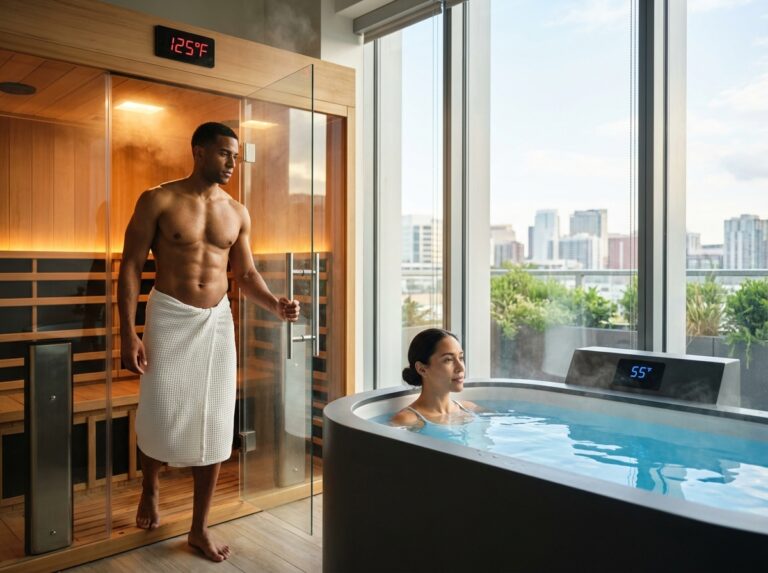
- Cold Plunge: For a powerful hormetic contrast, perform your sauna session first, then follow with a 2-5 minute cold water immersion. The heat opens up blood vessels, and the cold constricts them, creating a vascular “pump.”
- Compression/Massage: Use compression boots or get a massage after your stack. The heat makes muscles more pliable and receptive to mechanical therapy.
| Level | Monday | Wednesday | Friday | Weekend |
|---|---|---|---|---|
| Beginner | Recovery Stack | Rest | Recovery Stack | Light Activity |
| Intermediate | Recovery Stack | Longevity Stack | Recovery Stack | Skin Stack |
| Advanced | Post-Train Stack | Longevity Stack | Post-Train Stack | Longevity or Skin Stack |
Safety, Contraindications and Device Selection
While the previous chapter laid out the “how-to” for stacking protocols, this section is about building a foundation of safety and making smart investments in your equipment. Pushing your biology is one thing; doing it recklessly is another. Understanding the risks, monitoring your body’s signals, and choosing the right tools are non-negotiable for achieving sustainable results.
Safety First: Navigating the Risks of Stacking
Combining heat and light therapies amplifies their effects, but it also magnifies the potential risks if you aren’t careful. Pay close attention to both acute and chronic concerns.
- Dehydration and Heat Illness. This is the most immediate risk. An infrared sauna can make you lose 0.5 to 1 liter of sweat per hour. Without proper hydration, this can lead to dizziness, headache, and fatigue. In severe cases, it can progress to heat exhaustion or heat stroke, marked by a core body temperature often exceeding 104°F (40°C) and a heart rate exceeding 160 bpm.
- Hypotension (Low Blood Pressure). Heat causes vasodilation, or the widening of your blood vessels, to cool the body. This naturally lowers blood pressure. For most people, this is temporary and harmless. But if you already have low blood pressure or get up too quickly after a session, you could experience lightheadedness or fainting.
- Photosensitivity. Certain medications and supplements can make your skin more sensitive to light. This includes some antibiotics (like tetracyclines), diuretics, and even natural supplements like St. John’s Wort. Using red light therapy while taking these can increase your risk of skin irritation or burns. Always check your medications for photosensitivity warnings.
- Retinal Exposure. While red and near-infrared light are generally considered safe for the eyes at therapeutic doses, high-intensity LED panels can be bright. Direct, prolonged staring into the light source is not recommended. The long-term effects of chronic exposure are still being studied, so caution is warranted.
Who Should Be Cautious? Population-Specific Warnings
Stacking is not for everyone. If you fall into any of these categories, you must consult a physician before beginning any protocol.
Pregnancy
Raising core body temperature is contraindicated during pregnancy. Both red light therapy and infrared saunas should be avoided.
Cardiovascular Conditions
While some studies, like a 2021 meta-analysis, show heat therapy can reduce blood pressure, the acute stress of a sauna session can be dangerous for those with unstable angina, recent heart attack, or severe aortic stenosis. Uncontrolled hypertension (blood pressure over 140/90 mmHg) is also a major contraindication.
Implanted Electronic Devices
Pacemakers, defibrillators, and other electronic implants can be affected by the intense heat and electromagnetic fields from some sauna heaters. It is best to avoid use unless cleared by your cardiologist.
Acute Illness or Fever
If you have a fever (temperature over 100.4°F or 38°C) or an active infection, a sauna will place additional stress on your body. Wait until you have fully recovered.
Monitoring Your Body: Subjective and Objective Cues
Listen to your body. Stop your session immediately if you experience dizziness, nausea, headache, or shortness of breath. Beyond subjective feelings, objective data can help you fine-tune your sessions for safety and efficacy.
- Heart Rate (HR) and HRV. A heart rate between 110-150 bpm during a sauna session is typical for a conditioning effect. However, a sustained rate over 160 bpm is a sign of excessive stress. Track your morning Heart Rate Variability (HRV); a significant drop the day after a session means you may have overdone it and need more recovery time.
- Urine Color. The simplest hydration gauge. Aim for a pale yellow color throughout the day. If it’s dark yellow post-session, you need to increase your water and electrolyte intake.
- Blood Pressure. If you have any concerns about hypotension, check your blood pressure before and after a session to understand your body’s response.
Choosing Your Gear: Device Selection and Quality
Your results are only as good as your tools. For red light therapy panels, look for devices that provide transparent data. Key metrics include specific wavelengths (clinically studied ranges are 630-670 nm and 810-880 nm) with an accuracy of ±5 nm. The most important metric is irradiance, measured in milliwatts per square centimeter (mW/cm²). A quality panel should deliver at least 100 mW/cm² at a distance of 6 inches to provide a therapeutic dose in a reasonable time. Look for third-party testing data and FDA or CE listings, which indicate compliance with safety and manufacturing standards.
For infrared saunas, the main differentiator is the heater type. Carbon heaters provide a lower surface temperature and more even, gentle heat distribution, while ceramic heaters get hotter and can provide more intense, targeted heat. Full-spectrum saunas combine near, mid, and far-infrared wavelengths, offering a broader range of therapeutic benefits. Ensure the sauna has adequate ventilation (4-6 air changes per hour) to maintain air quality. Essential accessories include protective goggles that block over 99% of the 630-880 nm wavelengths for RLT, a reliable timer, and a thermometer to monitor the ambient temperature.
Finally, proper hygiene is critical. Wipe down your RLT panel and sauna interior with a non-toxic cleaner weekly. For commercial setups, a monthly UV sanitation cycle is a good practice. Regularly check that all heaters are functioning correctly to ensure consistent and safe operation.
Frequently Asked Questions
Is it better to do red light before or after a sauna?
Preclinical evidence suggests that using red light therapy before an infrared sauna is optimal for priming your cells. This pre-treatment can make your mitochondria more resilient and responsive to the beneficial heat stress that follows. However, using RLT after the sauna is also effective for enhancing recovery, so the most important factor is consistency with your routine.
Evidence Level: Preclinical.
Practical Tip: If your main goal is boosting cellular energy and resilience, try red light first. If you are focused purely on post-workout muscle recovery, using it after your sauna session works well too.
Why are specific wavelengths used for red light therapy?
Wavelengths are chosen based on their unique ability to penetrate human tissue and trigger specific biological responses. Red light, typically in the 630-670 nm range, is absorbed more superficially and is fantastic for skin rejuvenation. Near-infrared light (810-880 nm) travels deeper into the body to reach muscles, joints, and even organs, making it ideal for recovery and reducing inflammation.
Evidence Level: Clinical and Preclinical.
Practical Tip: Choose a device with both red and near-infrared wavelengths for comprehensive benefits, or select one that targets your primary goal, like skin health or deep tissue repair.
How long until I see skin or performance results?
You can often feel performance benefits, like reduced muscle soreness and faster recovery, within the first one to two weeks of consistent stacking. Visible skin improvements, such as enhanced texture and reduced fine lines, require more patience and typically appear after 4 to 12 weeks as your body needs time to build new collagen.
Evidence Level: Clinical (small trials) and Anecdotal.
Practical Tip: Take weekly progress photos in the same lighting to track skin changes, and keep a simple journal to note your energy levels and workout recovery times.
How often can I stack sessions?
A routine of 3 to 4 stacked sessions per week provides a great balance for achieving results without overtaxing your system. Some advanced users or athletes may benefit from up to 5 sessions weekly, but it is essential to monitor your body for signs of fatigue. Remember that recovery is when the real magic happens.
Evidence Level: Anecdotal and based on athletic protocols.
Practical Tip: If you notice a consistent drop in your Heart Rate Variability (HRV) or your sleep quality suffers, scale back your frequency to 2-3 times per week.
What are safe temperature and duration limits for beginners?
If you’re new to this, start slow to let your body adapt. A good starting point is a sauna temperature of 120–140°F (49–60°C) for a duration of 15 to 20 minutes. You can gradually increase the time and heat as your tolerance builds over several weeks.
Evidence Level: Based on clinical guidelines for heat acclimation.
Practical Tip: Always prioritize how you feel over the timer. If you feel lightheaded or unwell, end the session immediately and hydrate.
Are there drug interactions or photosensitivity concerns?
Yes, this is an important consideration. Certain medications, including some antibiotics, diuretics, and acne treatments like retinoids, can make your skin more sensitive to light. This increases the risk of irritation or burns from red light therapy, so it’s crucial to be aware of your prescriptions.
Evidence Level: Clinical.
Practical Tip: Check your medication labels for warnings about sun exposure. If such a warning exists, consult your doctor or pharmacist before starting red light therapy.
Can stacking speed detox or heavy metal clearance?
This combination can significantly support your body’s natural detoxification processes. The infrared sauna promotes deep sweating, which helps excrete certain toxins and heavy metals, while red light therapy enhances lymphatic system function to help clear metabolic waste more efficiently.
Evidence Level: Preclinical and small human studies.
Practical Tip: Maximize the detox benefits by drinking plenty of filtered water before your session and replenishing with an electrolyte drink afterward.
Are there specific biomarkers to track progress?
Absolutely. Using a wearable to track your Heart Rate Variability (HRV) is a great way to see how your nervous system is adapting. For a deeper look, you can get bloodwork to monitor inflammatory markers like C-reactive protein (CRP) and track subjective metrics like sleep scores and daily energy levels.
Evidence Level: Clinical and Anecdotal.
Practical Tip: A stable or upward trend in your morning HRV is a positive sign of adaptation. A significant, sustained drop suggests you may need to dial back the intensity or frequency of your sessions.
How to combine with cold exposure and sleep hygiene?
For a powerful contrast therapy session, do your sauna stack first, then follow it with a 2-3 minute cold shower or plunge to amplify the hormetic response. To optimize sleep, schedule your stack at least two hours before bed; this allows your core body temperature to rise and then fall, which is a key signal for initiating sleep.
Evidence Level: Anecdotal and based on physiological principles.
Practical Tip: Stacking too close to bedtime can be stimulating for some people. If you find it energizing, stick to morning or afternoon sessions.
Conclusions and Next Steps
We’ve explored the science and protocols, and the conclusion is clear. Stacking red light therapy and infrared sauna sessions creates a powerful synergy that amplifies the benefits of each. The gentle heat from the sauna improves circulation, which helps deliver more oxygen to your cells. This prepares your body to absorb red and near-infrared light more effectively. The light then energizes your mitochondria, leading to increased ATP production, reduced inflammation, and enhanced cellular repair. This combined effect means faster muscle recovery, more vibrant skin, and a noticeable boost in overall energy that you simply can’t achieve with either modality alone. It’s a foundational practice for anyone serious about performance and longevity.
To make it simple, here is a compact checklist to guide your practice.
- Optimal Ordering
Perform your red light therapy session for 10 to 20 minutes immediately before entering the sauna. This pre-conditions your cells, making them more receptive to the benefits of the heat. - Frequency and Consistency
Begin with 2 to 3 stacked sessions per week. As your body adapts, you can gradually increase to 4 or 5 sessions, but always prioritize at least one or two recovery days. - Core Safety Guidelines
Hydration is critical. Drink plenty of water with electrolytes before and after each session. Start with shorter sauna durations (15–20 minutes) at lower temperatures (120–140°F or 49–60°C) and slowly increase as you build tolerance. - Key Markers to Track
Pay attention to subjective feedback like your energy levels, sleep quality, and muscle soreness. For objective data, monitor your Heart Rate Variability (HRV) and resting heart rate to ensure you are recovering properly.
Your Personalized Action Plan
For the Competitive Athlete
Your First Week: Schedule three stacked sessions, ideally after your most demanding workouts. Aim for 15 minutes of RLT targeting key muscle groups, followed by a 25-minute sauna session at 150–160°F (65–71°C). Expected Outcomes: You should notice a significant reduction in post-workout soreness (DOMS) within the first two weeks. By the 12-week mark, expect faster overall recovery times and potentially improved endurance. When to Adjust: If performance drops or you feel fatigued, reduce frequency. If you hit a recovery plateau after three months, consider upgrading to a more powerful, full-spectrum device and consult a sports medicine professional.
For the Dedicated Biohacker
Your First Week: Use this week to establish a baseline for your key metrics, particularly HRV and sleep scores. Integrate two or three evening sessions, starting with 10 minutes of full-body RLT and a 20-minute sauna at around 140°F (60°C), finishing at least two hours before bed. Expected Outcomes: Look for an upward trend in your HRV and deep sleep duration within the first month. Subjective feelings of increased morning energy and mental clarity should follow. When to Adjust: A consistent drop in HRV is a sign to pull back. If you want to dive deeper, consult a functional medicine practitioner for advanced biomarker testing. An upgrade to a device with precise, programmable wavelengths can allow for more targeted protocol testing.
For the Person Focused on Skin Health
Your First Week: Take clear, well-lit baseline photos of the skin areas you want to improve. Start with three sessions, using RLT for 10–15 minutes on the face, neck, and chest, followed by a gentle 20-minute sauna at a lower temperature of 120–130°F (49–54°C) to avoid inflammation. Expected Outcomes: You may see improvements in skin tone and a healthy glow within four to six weeks. A visible reduction in fine lines and enhanced firmness can take up to 12 weeks of consistent use. When to Adjust: If you experience any redness or irritation, lower the sauna temperature or RLT duration. If you see no change after 12 weeks, consult a dermatologist and consider a more powerful RLT panel with proven irradiance levels for collagen synthesis.
An Evidence-Minded Look Ahead
As of the current research landscape, the enthusiasm for stacking is well-supported by strong preclinical data and a growing body of smaller human trials. The mechanisms of synergy, particularly the interplay between vasodilation and photobiomodulation, are well-established. However, it is important to remain grounded. The field is still awaiting large-scale, long-term randomized controlled trials to confirm the effects on complex outcomes like athletic performance metrics and longevity biomarkers.
Looking ahead to 2030, research priorities should focus on a few key areas. We need larger human studies to define optimal dosing, timing, and temperatures for specific goals. Further investigation into the long-term effects on epigenetic aging and cardiovascular health markers will also be crucial. While many studies have shown promise, as the Mayo Clinic notes, more rigorous research is needed to move these protocols from the biohacking space into mainstream clinical practice. Until then, the best approach is to follow established safety guidelines, listen to your body, and track your own results.
Sources
- Red Light Therapy and Infrared Sauna Sessions: The Science of … — Infrared saunas accelerate the removal of metabolic waste through sweating. Red light therapy enhances lymphatic drainage and reduces …
- Combine Infrared Saunas & Red Light Therapy to Optimize Your … — This combination not only supports relaxation and recovery but also aids in cellular regeneration and immune support, working to optimize your …
- Infrared Sauna + Red Light Therapy = Synergistic Weight & Fat Loss — Enhanced Fat Burning: The infrared heat in the sauna increases your metabolism and heart rate, while the red light works at a cellular level to …
- Why Infrared Sauna and Massage Are the Smartest Recovery Duo — Infrared saunas and massage therapy are being hailed as the ultimate recovery pairing for 2025, offering benefits that span from improved sleep to cellular …
- Do infrared saunas work? What the science says. — A 2021 meta-analysis found that heat therapy can reduce blood pressure and improve the ability of blood vessels to expand and contract properly.
- Infrared Saunas: What They Do and 6 Health Benefits — Studies show that infrared saunas can help boost heart health and reduce blood pressure. Researchers equated the physical response of an infrared sauna session …
- Far-infrared therapy for cardiovascular, autoimmune, and other … — FIR therapy improves blood flow in heated surface areas, causing an increase in vascular shear stress and enhancement of the activity of GTP cyclohydrolase I, …
- Do infrared saunas have any health benefits? – Mayo Clinic — Many studies have looked at using infrared saunas in the treatment of long-lasting health problems and found some proof that saunas may help.
Legal Disclaimers & Brand Notices
Medical Disclaimer: The content provided in this article is for informational and educational purposes only. It is not intended to be a substitute for professional medical advice, diagnosis, or treatment. Always seek the advice of a qualified healthcare provider, such as a physician or dermatologist, with any questions you may have regarding a medical condition, procedure, or the use of specific wellness protocols, including red light therapy and infrared sauna use.
The discussion of risks, contraindications (such as pregnancy or cardiovascular conditions), and specific protocols (including temperature and duration) are based on general scientific literature and should not be interpreted as personalized medical guidance. Never disregard professional medical advice or delay in seeking it because of something you have read in this article.
Trademark and Brand Notice: All product names, logos, and brands mentioned or implied in this article are the property of their respective owners. The use of these names, logos, and brands is for identification purposes only and does not imply endorsement.